


Detailed selection guide
How to use this technical purchasing decision collection
Steel Pallet and Warehouse Racking Resources for Industrial Buyers is organised as a decision resource rather than a catalogue of interchangeable photographs. Each page identifies a product form, operating problem, or engineering question and then explains the inputs that change the specification. The purpose is to help purchasing, warehouse, engineering, logistics, and production teams move from broad research to a concise project brief. A useful brief does not need to contain every final drawing detail, but it should make the load, handling method, storage position, operating environment, quantity, and commercial objective visible.
Start by identifying the physical object that must be supported, contained, separated, or stored. Record its dimensions, weight, centre of gravity where relevant, critical surfaces, packaging condition, and the way people or equipment interact with it. Then document the present problem. The issue may be pallet damage, wasted empty-return volume, poor access, unstable stacking, difficult product identification, insufficient storage density, corrosion, awkward loading, or an existing product that no longer fits the process. This context gives the manufacturer a reason for each proposed feature.
Requirement definition
Translate the operating route into measurable inputs
A technical purchasing decision normally touches several operating interfaces during its service life. A load may sit on a floor, enter on forklift tines, cross a dock, rest on rack beams, stack above another unit, pass through a container, and return empty. Those positions do not support the product in the same way. The requirement should therefore distinguish static storage, lifting, stacking, rack support, conveyor contact, transport restraint, and any local point loads. If only a single capacity number is supplied, important design conditions can remain hidden.
Handling equipment also changes the proposal. Fork width, tine spacing, entry direction, lift height, turning space, pallet-jack wheel paths, reach-truck needs, crane or sling points, and automated interfaces can influence the lower frame and access openings. The design should be reviewed against the real equipment available at the site rather than an assumed generic truck. Photographs of the approach path and current unit can clarify details that are difficult to communicate in a short written description.
Storage & stacking
Define where the product waits and what surrounds it
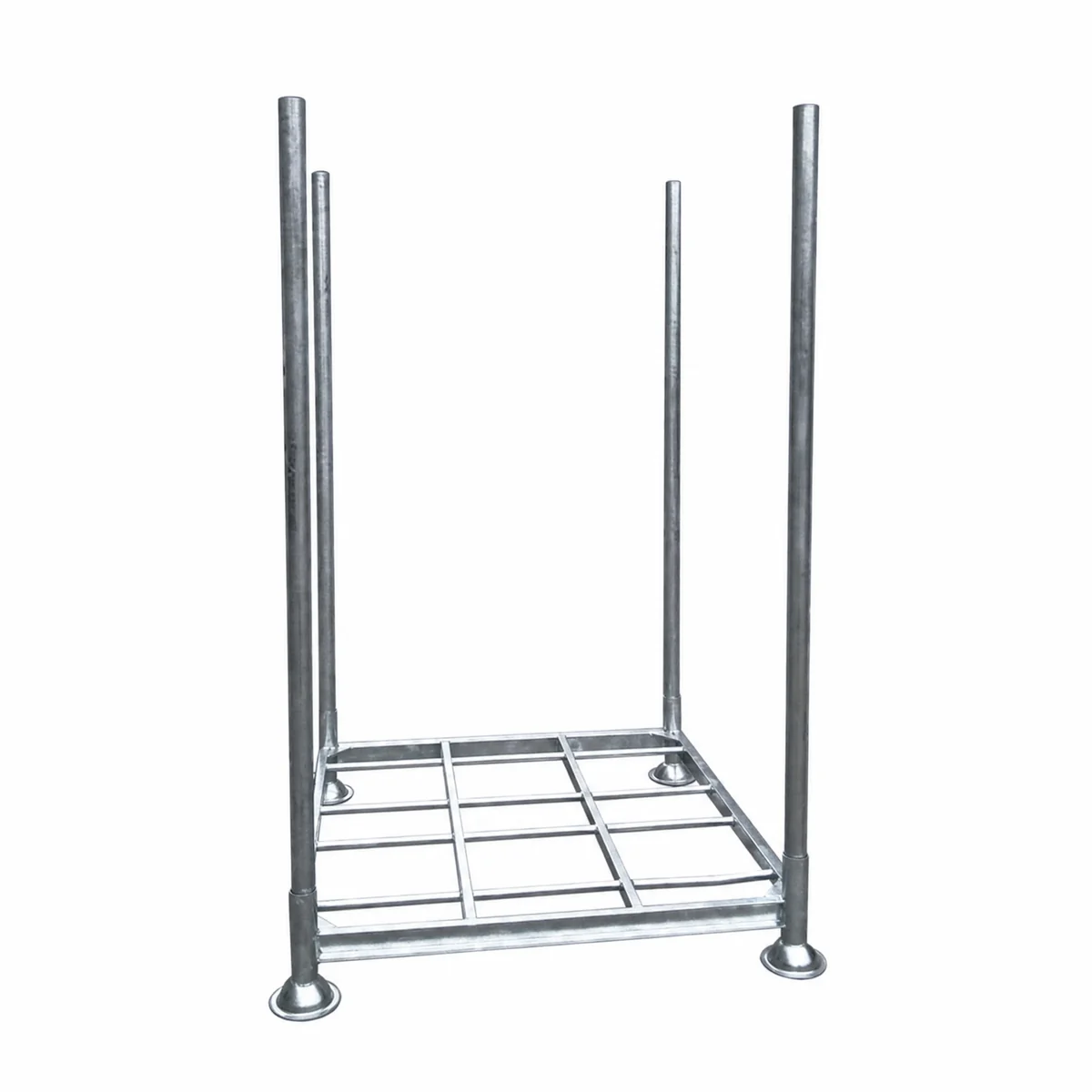
Storage geometry is often as important as the load itself. Confirm whether the unit stands on a level floor, on two rack beams, inside a lane, within an installed system, or in a free-standing stack. Note the maximum loaded stack count, available clear height, aisle restrictions, sprinkler or building constraints that the warehouse planner must consider, and the clearance needed for safe placement. For portable post pallets and stackable racks, the positive engagement between posts, cups, and feet should be part of the specification discussion.
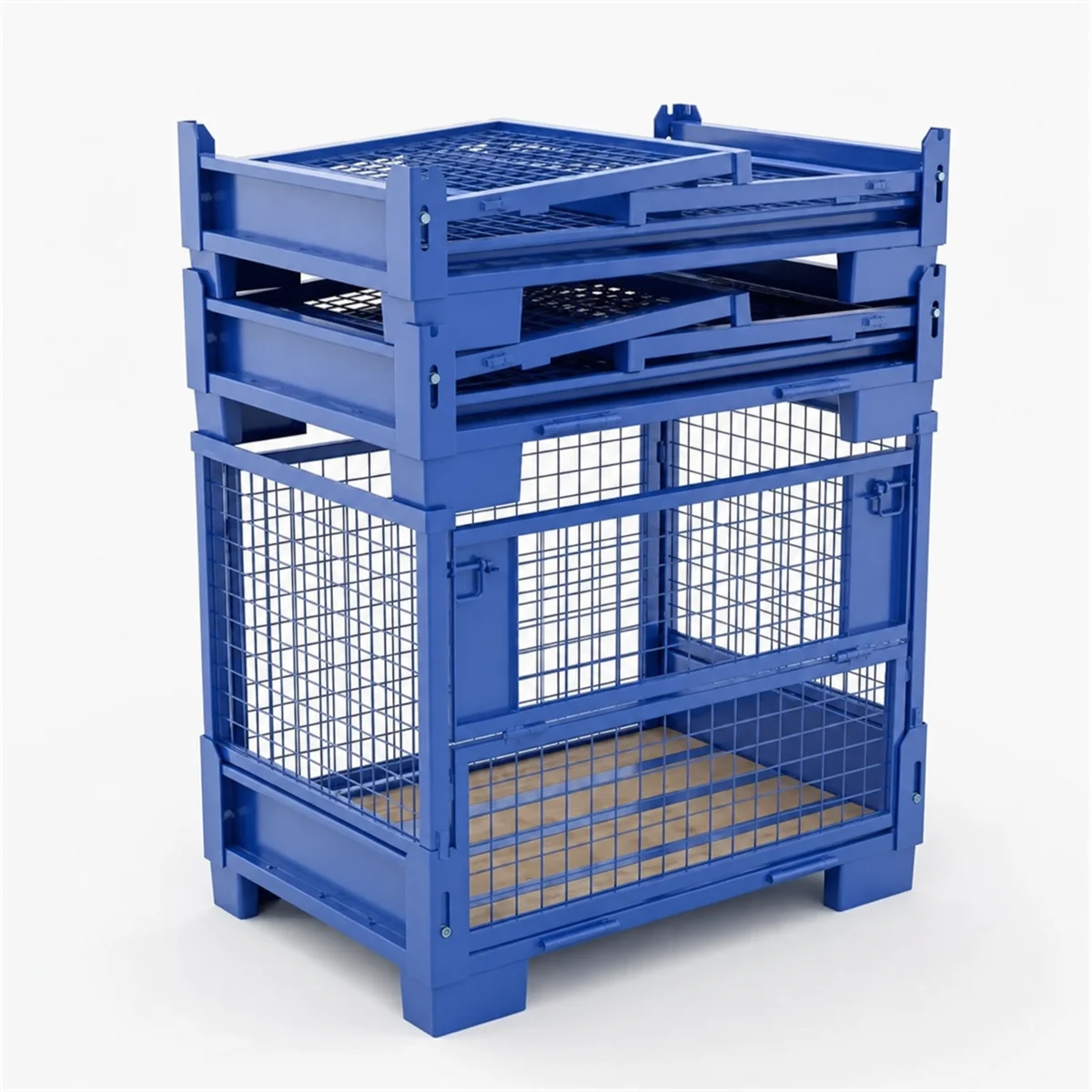
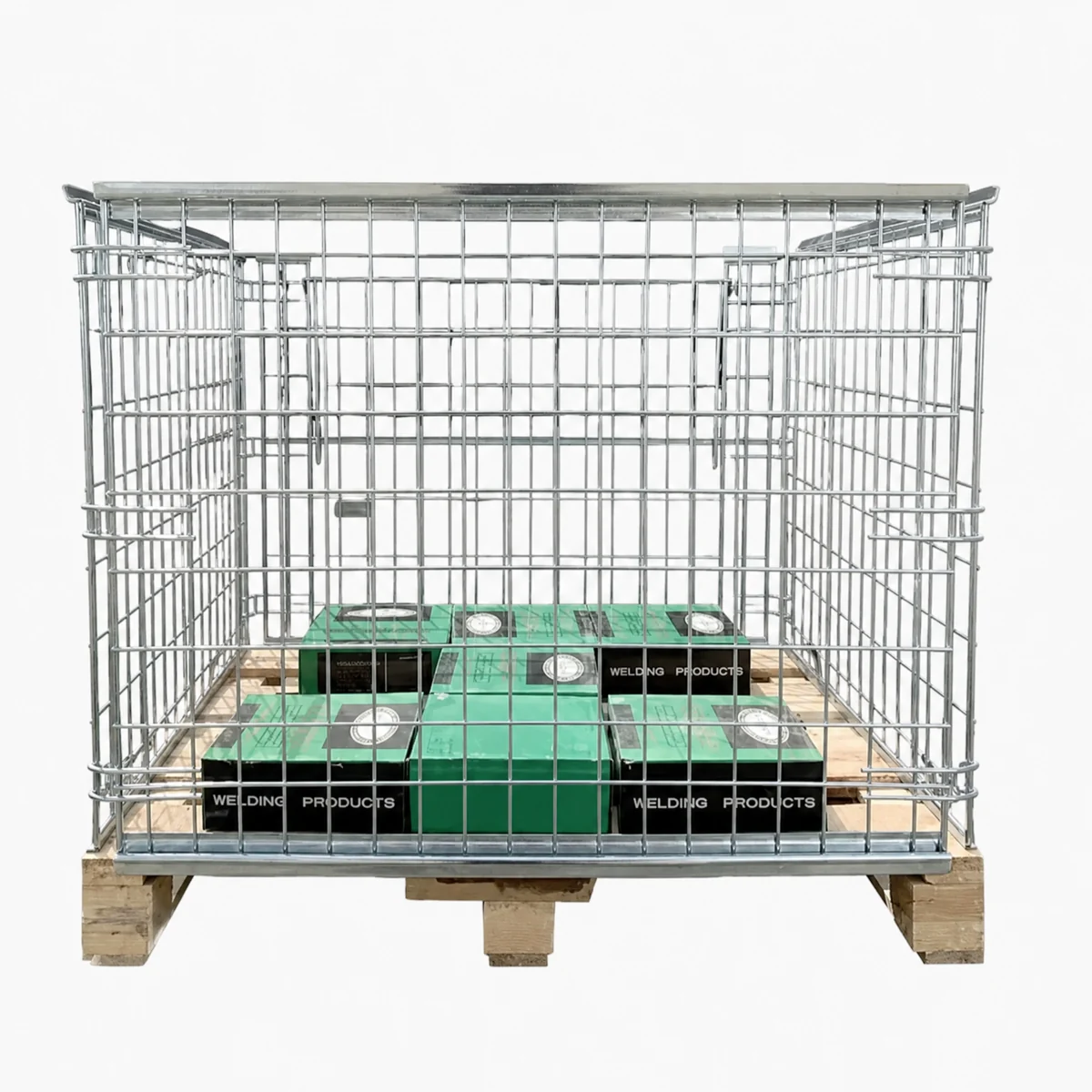
Access requirements should be written from the operator’s point of view. A mesh cage may need a half-drop gate so components can be reached while another unit remains above it. A pallet box may require a removable panel or tipping access. A fabric roll rack may need open sides and carefully positioned support bars. A selective racking project may prioritise immediate access to every pallet position, while a high-density solution may accept a different retrieval sequence. The workflow determines which compromise is appropriate.
Construction & finish
Make material and surface decisions in context
Steel construction can use formed sheet, tube, channel, angle, mesh, runners, posts, panels, feet, cups, gates, hinges, and local reinforcement in different combinations. The visible shape is only one part of the decision. Member orientation, joint access, drainage, edge treatment, contact surfaces, and replaceable components influence manufacturability and service behaviour. A buyer should ask how the proposed arrangement responds to the supplied load path and handling cycle, not simply whether it appears heavier than another quotation.
Surface treatment should follow the environment. Powder coating can support colour identification and a controlled indoor finish. Zinc or hot-dip galvanizing may be considered where moisture and corrosion exposure require a different approach. Cleaning methods, food or process context, outdoor storage, abrasion at fork and stack points, and the desired identification system should be supplied before the finish is confirmed. Colour, plates, labels, barcodes, and ownership marks can then be placed where they remain visible without interfering with contact or stacking zones.
Supplier comparison
Compare proposals against the same operating brief
Supplier quotations are easier to compare when every bidder receives the same input pack. Include the product or goods description, drawings or photographs, external and internal dimensions, quantity, target load condition, support method, handling equipment, entry direction, stack height, finish, delivery destination, inspection requirement, and packaging expectation. If an existing unit is being replaced, identify which features work and which fail. This prevents a lower price from winning simply because a quotation silently excludes a feature that another supplier has included.
Review the returned proposal for assumptions and exclusions. Confirm whether dimensions are external or internal, whether the stated load refers to floor storage, lifting, stacking, or rack support, and whether the finish and packing are included. Check gate orientation, usable clear space, post removal, nesting or collapse sequence, forklift openings, rack-beam contact, and container loading where these affect daily use. A drawing approval step can resolve these interfaces before material is committed to production.
Manufacturing & inspection
Connect approval, production, quality checks, and shipment
Once the requirement is defined, the manufacturing plan can follow a logical sequence: drawing review, material preparation, cutting, forming, welding, fit-up, surface treatment, assembly, inspection, and packaging. The exact route varies by product, but each stage should preserve the dimensions and functional interfaces agreed during approval. Inspection should check the features that matter to the application, such as overall geometry, fork access, stack engagement, gate movement, support locations, finish condition, and identification.
Export packaging and loading should not be left until the final day. Collapsible cages, removable posts, nested bases, stacked pallet boxes, and fixed racking components each create different packing opportunities and protection risks. Destination, transport mode, unloading equipment, package orientation, and finish protection can influence how units are bundled. When the empty-return concept is important, the shipment discussion should also confirm how operators assemble, collapse, dismantle, or restack the product after delivery.
Next step
Use internal links to narrow the specification, then send the project
The cards above connect this collection to detailed product, application, resource, article, and representative-project pages. Follow the closest product form first, then use the related links to compare alternatives or understand a particular technical issue. A buyer considering a flat steel pallet may also need to review post pallets, cage pallets, stillages, surface treatment, load definition, and racking compatibility. A warehouse team reviewing installed racking should also examine the pallet profile and handling equipment that will serve the system.
When the remaining questions are specific to the project, use the request-a-quote form. Send the dimensions, load context, quantity, application, handling equipment, storage method, finish, destination, and available drawing or photographs. Bridgent can then respond to the actual requirement instead of offering a generic model. Clear inputs shorten the route to a useful engineering conversation and help keep technical, commercial, packaging, and delivery expectations aligned.