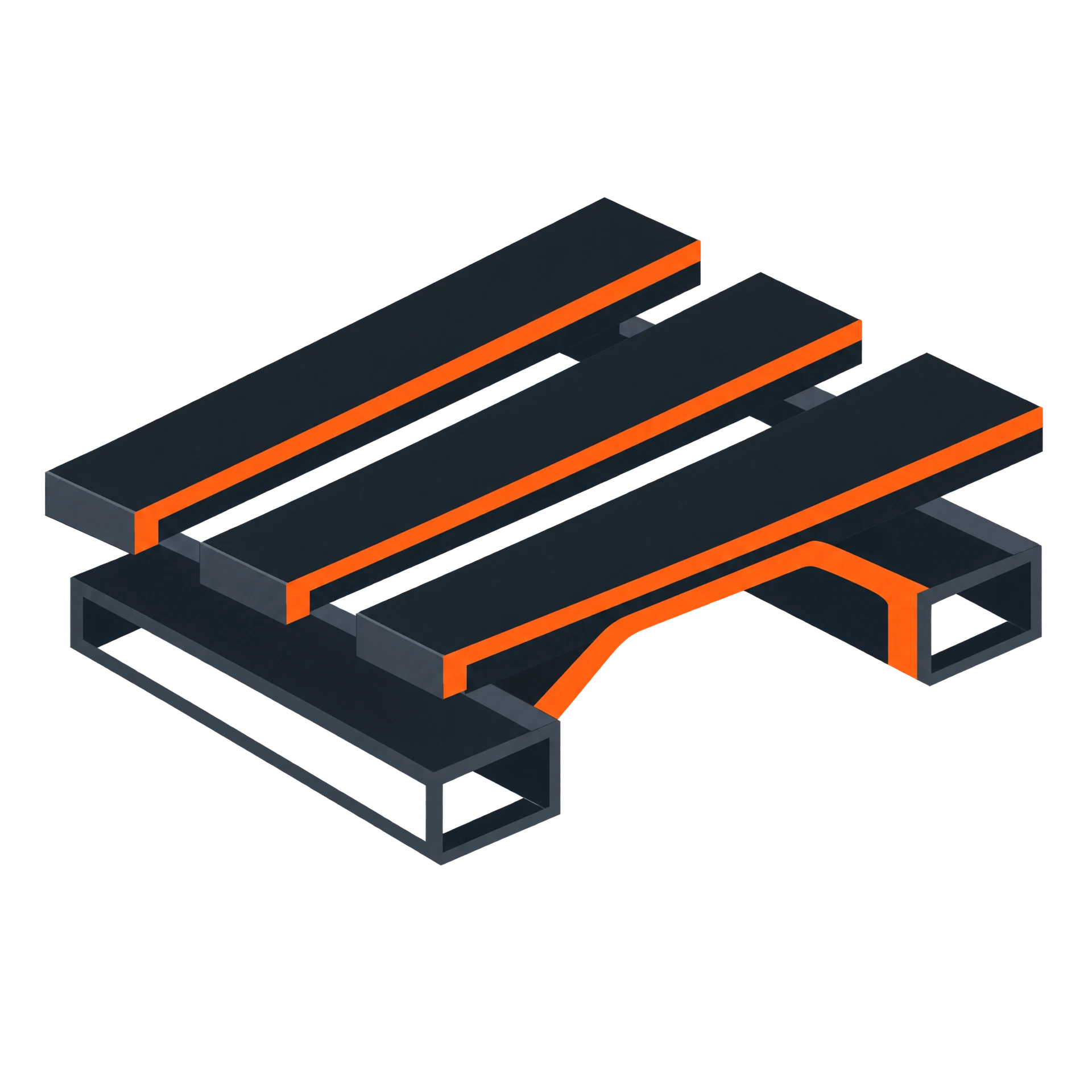
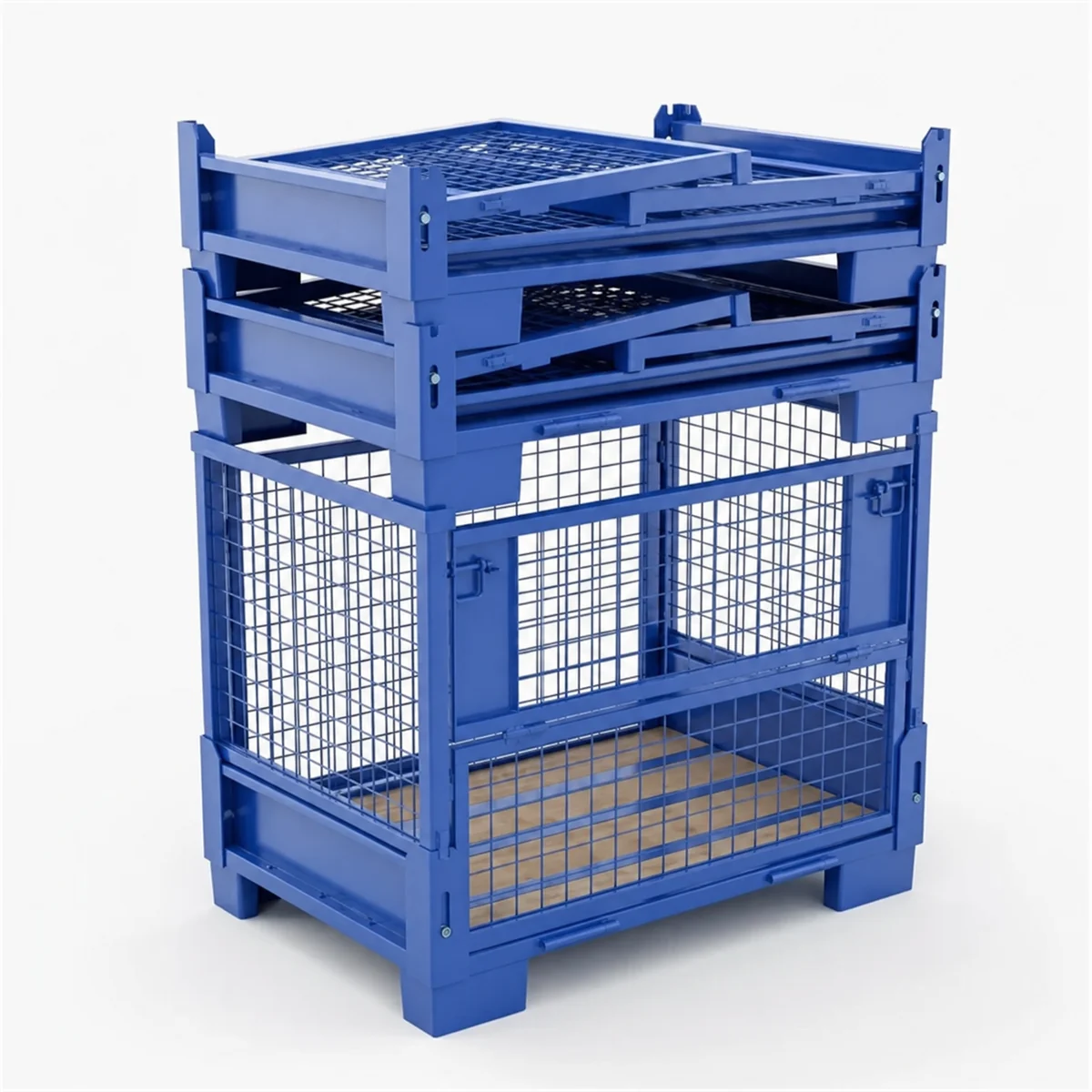
Define the two states
Do not treat stackable and nestable as interchangeable labels
A stackable steel pallet is selected where loaded units need a controlled vertical storage position. Its key questions are the loaded product envelope, pallet-to-pallet contact, alignment, placement method, clear height, forklift access, and the support conditions of the intended stack. A nestable steel pallet is selected where empty-unit accumulation and return space matter. Its key questions are nesting direction, clearance, separation, restraint, empty transport, and the relationship between the empty group and the available handling equipment.
Some projects may need elements of both ideas, but one feature cannot be assumed from the other. Empty nesting does not prove that a pallet is suitable for loaded stacking, and a stackable frame does not automatically create an efficient empty-return state. The buyer should make the desired loaded and empty states visible in the same project brief, then ask for the selected configuration’s drawing, operating instructions, and evidence before publishing any numeric or suitability claim.
Reference configuration
Comparison brief: what to collect before choosing a flow
This table focuses on decision inputs. It does not claim a standard geometry, ratio, capacity, or return pattern for every product family.
| Configuration field | What the project record should show |
|---|---|
| Loaded storage objective | State whether vertical loaded storage, product separation, direct access, clear height, or temporary buffer capacity drives the decision. |
| Empty-return objective | State the empty collection footprint, backhaul route, transport vehicle, return frequency, recovery method, and desired operating simplicity. |
| Product geometry | Record goods envelope, contact points, product protection needs, orientation, overhang, and whether the load changes between cycles. |
| Handling sequence | Describe forks, trucks, approach, placement, separation, operator access, and any special equipment in both loaded and empty states. |
| Support conditions | State floor, fork, racking, loaded stack, and empty accumulation conditions separately with the relevant support interfaces. |
| Evidence required | Request the selected configuration drawing, state-specific operating notes, packing plan, and supporting records for any approved statement. |
Structure and operating map
Decision map: loaded state and empty state
A project can use this sequence to frame the correct question before comparing product shapes.
Loaded unit
Start with the goods, their support, product protection, forklift access, and the storage condition needed when the pallet is full.
Vertical storage
If loaded units must stand together, define the proposed pallet-to-pallet contact, placement, clear height, and state-specific support condition.
Empty accumulation
If return space is critical, define how empty units enter, separate, are restrained, and move through the backhaul or collection route.
Selected configuration
Choose only after the drawing and operation show that both required states work together for the project.
When loaded storage is the first constraint
Choose a stackable concept around the loaded product, not only floor-space pressure
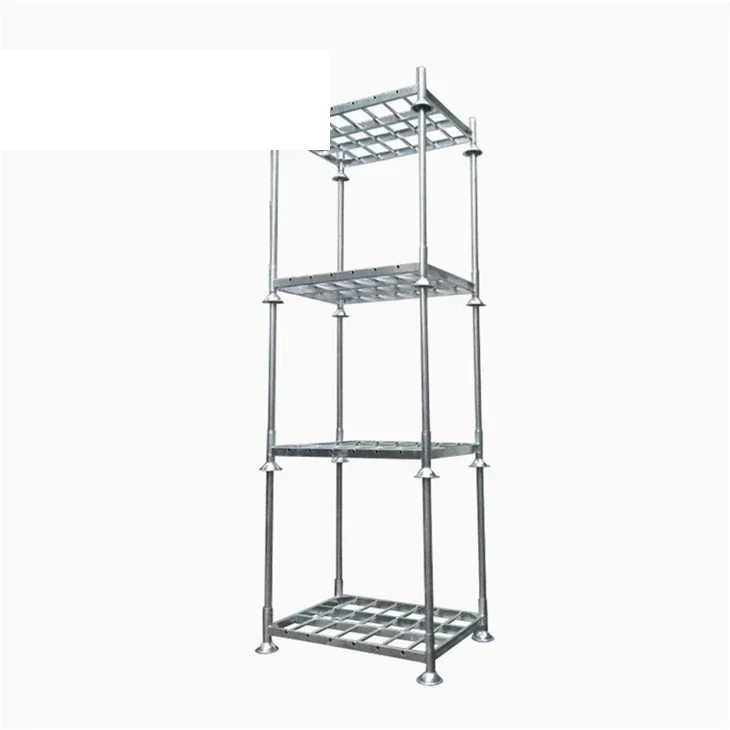
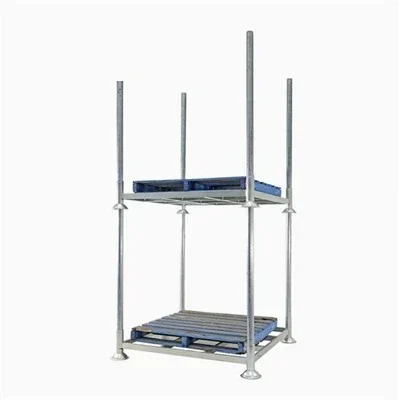
A stackable concept may be appropriate when the operation needs defined vertical separation for goods that cannot be compressed, when buffer storage must use height, or when a portable stack offers more flexibility than an installed layout. Start with the product envelope and the position it occupies inside the pallet. Then record the pallet-to-pallet contact, alignment route, placement method, forklift clearance, available clear height, floor condition, and any requirement for access while a unit is above.
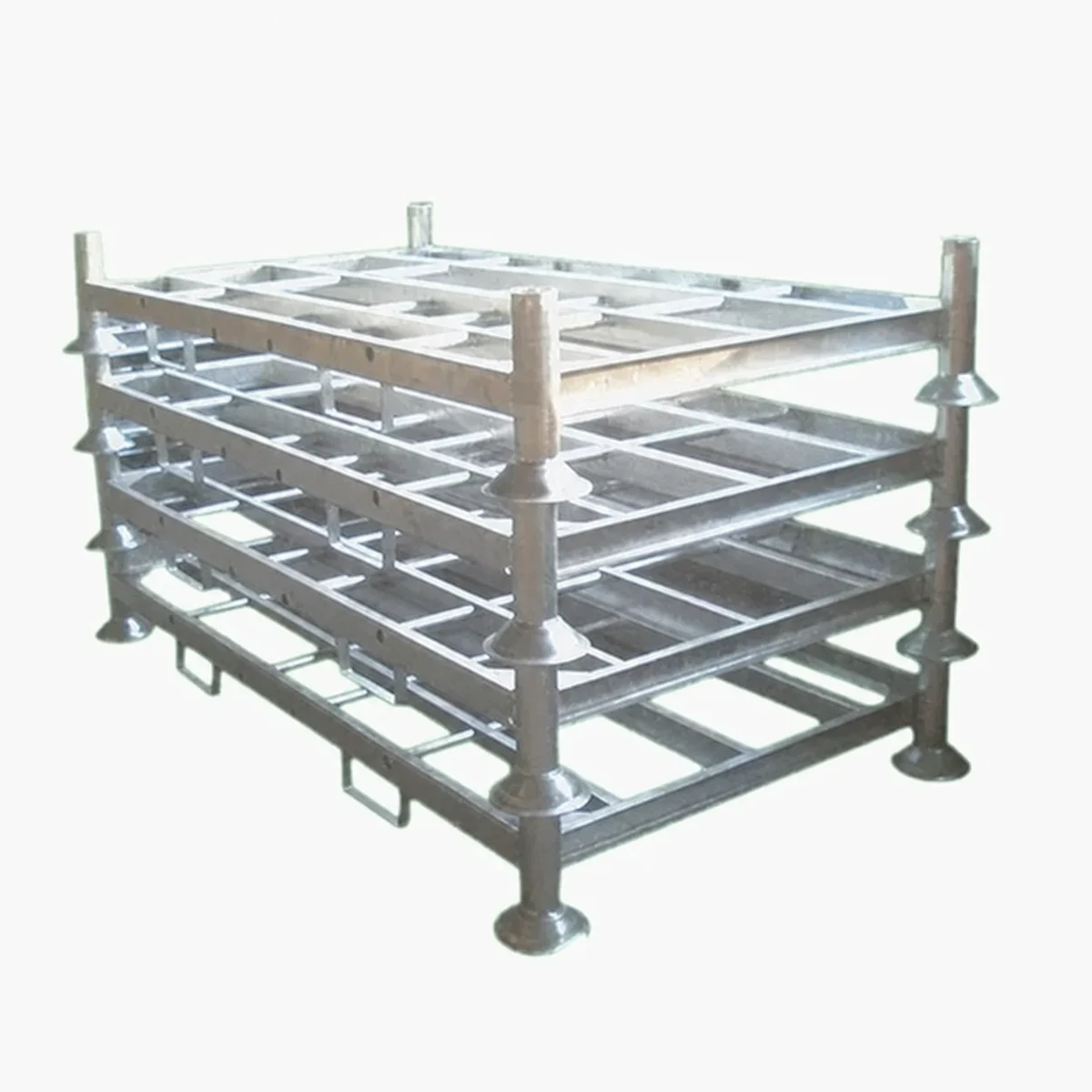
The selected drawing should make the loaded stack interface visible. Posts, feet, cups, rails, or frames may contribute to alignment, but their visible presence does not establish an allowable arrangement on its own. The buyer should request the actual operating condition and documentation for the selected configuration, including any limits, exclusions, inspection points, and equipment assumptions.
When empty return is the first constraint
Choose a nestable concept around the complete backhaul route
A nestable concept may be appropriate when empty units return across a repeat route and the available collection or vehicle space is limited. The question is not simply how compact an empty photo looks. It is how the selected unit enters another, what surface or feature locates it, how many units are handled as a group, how the group is restrained, and how one unit is separated again at the next location. Operator reach, fork access, door clearances, labels, cleaning, and loose accessories all affect the practical outcome.
A product should be evaluated in its empty state and its loaded state. Identify whether the empty group travels by forklift, whether a vehicle or container has a restriction, where the group is unloaded, and how the first pallet is recovered. The selected variant’s nesting direction, clearance, and recovery method should be part of the controlled drawing or instruction; this page intentionally does not publish generic nesting values.
The combined project brief
Use one RFQ to show both states and the trade-off
Many returnable programmes balance vertical loaded storage against efficient empty return. The most productive RFQ includes the loaded goods, support and handling requirements, as well as the empty collection, transport, and recovery sequence. It identifies what is essential, what is preferred, and what can be changed. For example, a buyer may require an open side for loading, but be able to accept a different empty grouping method; another may require a compact backhaul but be able to use floor storage rather than loaded vertical stacking.
Compare supplier proposals against the same flow. Ask each supplier to show the selected loaded and empty states, the drawing revision, product-contact arrangement, handling assumptions, storage support conditions, packing state, and open questions. This prevents an attractive product image or broad product label from replacing the project-specific decision.
Decision comparison
Qualitative comparison: stackable versus nestable workflows
This comparison identifies the question to verify. It does not make a configuration-specific performance claim.
| Decision topic | Stackable focus | Nestable focus | Confirm with supplier |
|---|---|---|---|
| Primary state | Loaded units stored vertically in a defined relationship. | Empty units accumulated or returned in a nested relationship. | Confirm the selected configuration’s approved state and operating instruction. |
| Key geometry | Stack contact, alignment, loaded envelope, post or frame relationship where applicable. | Nesting direction, stops, clearance, empty group geometry, and separation path. | Confirm by drawing, matching visual evidence, and the project operating brief. |
| Handling question | How is a loaded unit placed and removed without contact or misalignment? | How are empty units inserted, separated, restrained, and recovered? | Confirm equipment, approach, operator access, and training or instruction needs. |
| Storage question | What clear height, floor position, rack request, or buffer sequence applies when loaded? | What collection footprint, backhaul space, vehicle, and destination recovery method applies when empty? | Confirm the relevant state-specific support and transport conditions. |
| Common mistake | Assuming a visible frame proves a loaded-stack limit or rack suitability. | Assuming compact empty geometry proves loaded stability or rack suitability. | Keep load, support, and evidence statements separate. |
Project sequence
A selection sequence for stackable versus nestable flows
The purpose is to expose the trade-off before a configuration is fixed.
- 1. Map the loaded route
Record goods, support, forklift, storage height, access, and whether vertical loaded storage is required.
- 2. Map the empty route
Record empty collection, nesting or dismantling, transport, restraint, destination recovery, and available footprint.
- 3. Identify the non-negotiables
State the features that cannot change, such as protected surfaces, access side, vehicle limitation, or storage-clear-height requirement.
- 4. Review one selected configuration
Use the configuration drawing and approved operating notes to confirm loaded and empty states separately before release.
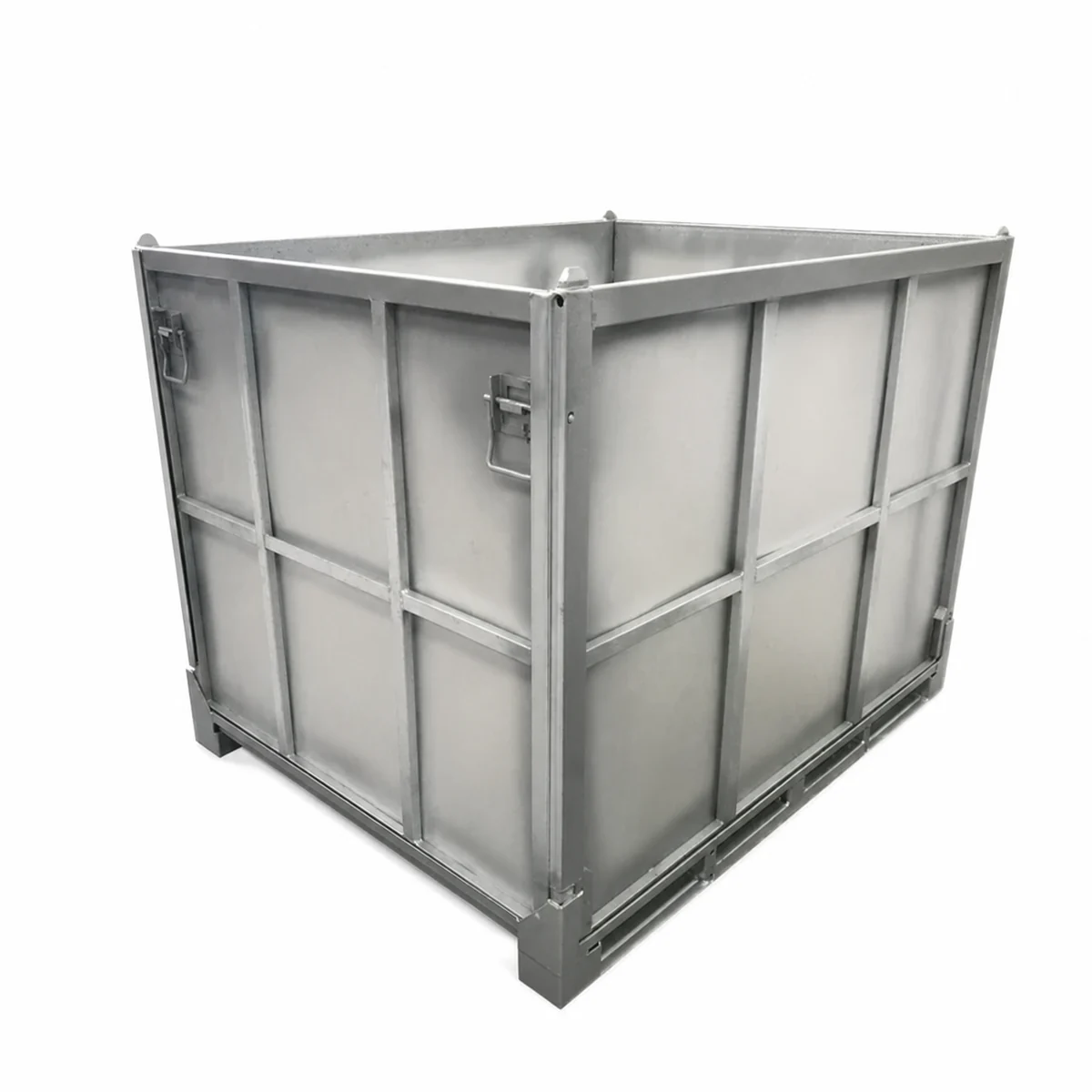
Product visual reference
Illustrative product forms with project-specific captions
Procurement and qualification
Ask for the drawing and operating method that match the state being compared
A useful supplier comparison makes the distinction visible: which information applies when the unit is loaded, and which applies when it is empty? Request the selected configuration’s drawing, variant identity, product-contact arrangement, loaded support condition, nesting or return method, and any limitation or inspection requirement. This gives purchasing and operations teams a basis to evaluate the proposed flow beyond a product family name.
Where a programme moves between multiple sites, retain the agreed assembled, loaded, and empty-state instructions with the drawing revision. This helps keep recovery and handling practices consistent and makes it easier to evaluate a later change to goods, truck, vehicle, or storage layout.
Frequently asked questions
Questions to resolve before requesting a quote
Can a pallet be both stackable and nestable?
A project may require both types of operating state, but the selected configuration must show and confirm each one separately. Neither state should be assumed from a product label or image.
Does a nestable pallet save a fixed amount of return space?
The empty arrangement depends on the chosen geometry, collection method, transport state, clearance, and restraint plan. Request a configuration-specific packed or nested plan rather than relying on a universal ratio.
What should we compare in a stackable pallet proposal?
Compare the loaded product envelope, pallet-to-pallet contact, placement method, access, support conditions, drawing revision, inspection points, and the empty-return method if relevant.
Which product pages should we read next?
Review the specific Stackable Steel Pallets and Nestable Steel Pallets pages, then send the loaded and empty workflow details through the RFQ form for a project discussion.