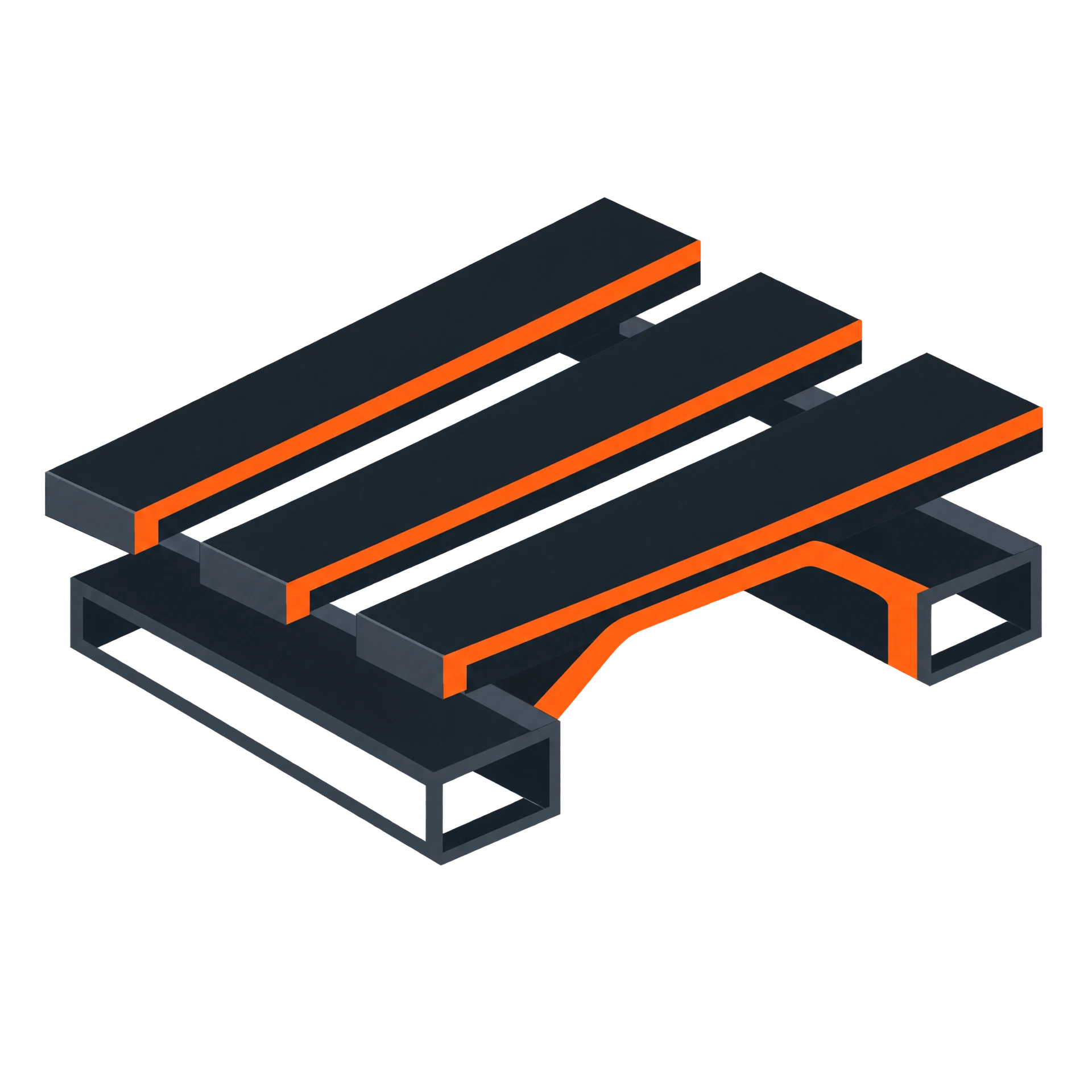

From product footprint to project drawing
Choose dimensions by the operating interfaces, not a generic size label
Steel-pallet dimensions begin with the goods. Record the product or package length, width, height, support/contact locations, centre of gravity where relevant, permitted overhang, and surfaces requiring protection. Then add the handling and storage interfaces: fork entry, tine clearance, pallet-jack or conveyor contact, rack beams, stack relationship, aisle or door clearance, packaging, and transport. The right overall envelope is the one that works through the complete route, not simply the one closest to an existing nominal pallet size.
A controlled drawing should separate external dimensions from the usable deck or internal space. It should also show the lower frame, fork openings, runners or feet, product-support positions, and any stack or racking bearing faces. This is especially important for stillages, pallet boxes, post pallets, and skids, where open sides, posts, panels, or dunnage can change the usable loading envelope. The guide below helps buyers prepare a dimension brief without publishing fictional standard sizes.
Reference configuration
Dimension record for a steel pallet or carrier
Use the selected configuration drawing to state what each dimension means and which operating interface it serves.
| Configuration field | What the project record should show |
|---|---|
| Goods envelope | Record product L × W × H, package variation, orientation, product-contact points, permitted overhang, and protected/no-contact zones. |
| Usable support or internal space | State usable deck area or clear internal envelope, measurement datums, loading clearance, fill height, and local obstructions. |
| Overall external envelope | State maximum outer dimensions including posts, panels, feet, labels, protrusions, packing, and any transport-clearance requirement. |
| Fork and lower-frame geometry | State entry sides, opening width/height, underside clearance, fork/tine envelope, approach direction, wheel or conveyor path where applicable. |
| Storage interfaces | State floor contact, rack beam locations, stack contact, loaded height, aisle or door clearances, and any selected storage orientation. |
| Shipment interface | State the packed external envelope, protected state, vehicle/container constraints, unloading equipment, and empty-return arrangement where relevant. |
Structure and operating map
Dimension map: four envelopes to distinguish
A single overall size does not answer every procurement and engineering question.
Goods envelope
The space occupied by the product or package, including any required orientation and protected clearance.
Usable support envelope
The deck or internal area that can actually receive the goods after frames, panels, posts, pads, or openings are considered.
External product envelope
The maximum outer dimensions of the pallet or carrier, including feet, posts, access features, labels, and other projections.
Operating envelope
The clear space needed for fork entry, stack placement, racking, aisle travel, doors, packing, and destination unloading.
Goods and deck relationship
Start with what is supported, not the pallet outline
The first dimensions belong to the goods or package. State the length, width, height, orientation, contact footprint, local bearing points, sensitive areas, and any change between versions. If a product is round, irregular, or has mounting points, include a sketch or photo. A deck may need rails, pads, pockets, corrugations, mesh, or a continuous surface depending on how the item is supported. The outer pallet outline alone does not show whether these interfaces are correct.
Define whether product overhang is permitted and where. Overhang may affect fork approach, stack clearance, rack placement, transport restraint, or aisle space. If the product needs a clear internal envelope in a stillage or pallet box, distinguish that usable interior from the external frame. This makes it easier for suppliers to quote the same requirement and helps prevent a product from fitting on paper but not in daily loading practice.
Fork, stack, and racking geometry
Use dimensions to describe the lower-frame and storage interfaces
Fork-entry dimensions should be described with the actual handling equipment. Record permitted entry sides, tine width and spacing, opening height, underside clearance, approach direction, and whether a pallet-jack, conveyor, reach truck, or other equipment creates additional restrictions. A four-way entry requirement is not merely four openings; it may change the lower-frame layout and the way the deck is supported.
For racking, provide beam positions, pallet orientation, bearing width, loaded height, and product overhang. For stacking, show the contact points, clear height, product envelope, and placement path. Treat the rack and stack interfaces as separate dimensions in the drawing. A standard external length and width cannot establish either condition without the related support geometry.
Packing and destination
Carry the dimension brief through shipping and empty return
The shipping size may differ from the operating size. A pallet can be wrapped, bundled, nested, folded, or supplied with removable posts or panels. When export, backhaul, or multi-site return is part of the project, record the packed outer envelope, protection, retained components, handling clearance, and destination unloading method. This information belongs in the packing and loading plan, not as an assumed extension of the nominal pallet size.
For a repeat programme, identify which dimensions are controlled by drawing and which can vary within an agreed tolerance. This supports supplier comparison, receiving inspection, warehouse planning, and later revisions. The project should also identify whether labels, plates, barcodes, or colour markings affect the external envelope or need a protected location to remain visible after stacking or packing.
Project sequence
A steel pallet dimensioning sequence
Use one clear measurement record so engineering, purchasing, warehouse operations, and logistics are working from the same interfaces.
- 1. Measure the goods
Capture product envelope, contact footprint, orientation, local projections, protected zones, and any permitted overhang.
- 2. Map handling and storage
Record forks, truck, access direction, floor, beam, stack, aisle, door, and clear-height constraints.
- 3. Define usable and external dimensions
Separate deck or internal usable space from the outer product envelope and show the lower-frame/entry dimensions.
- 4. Review packing and release
Add packed dimensions, empty-return state, inspection datums, marking location, quantity, and destination requirements before approving the drawing.
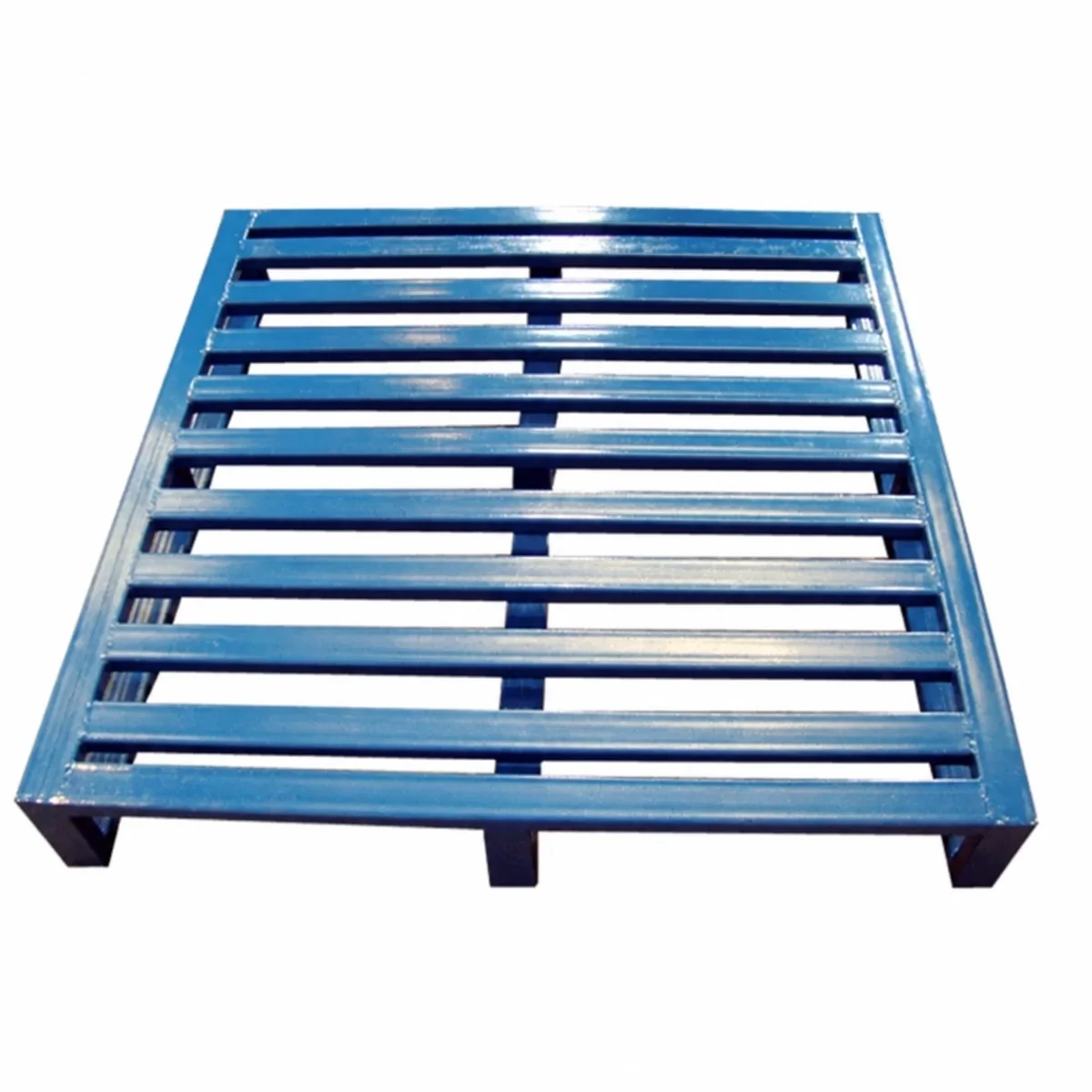
Product visual reference
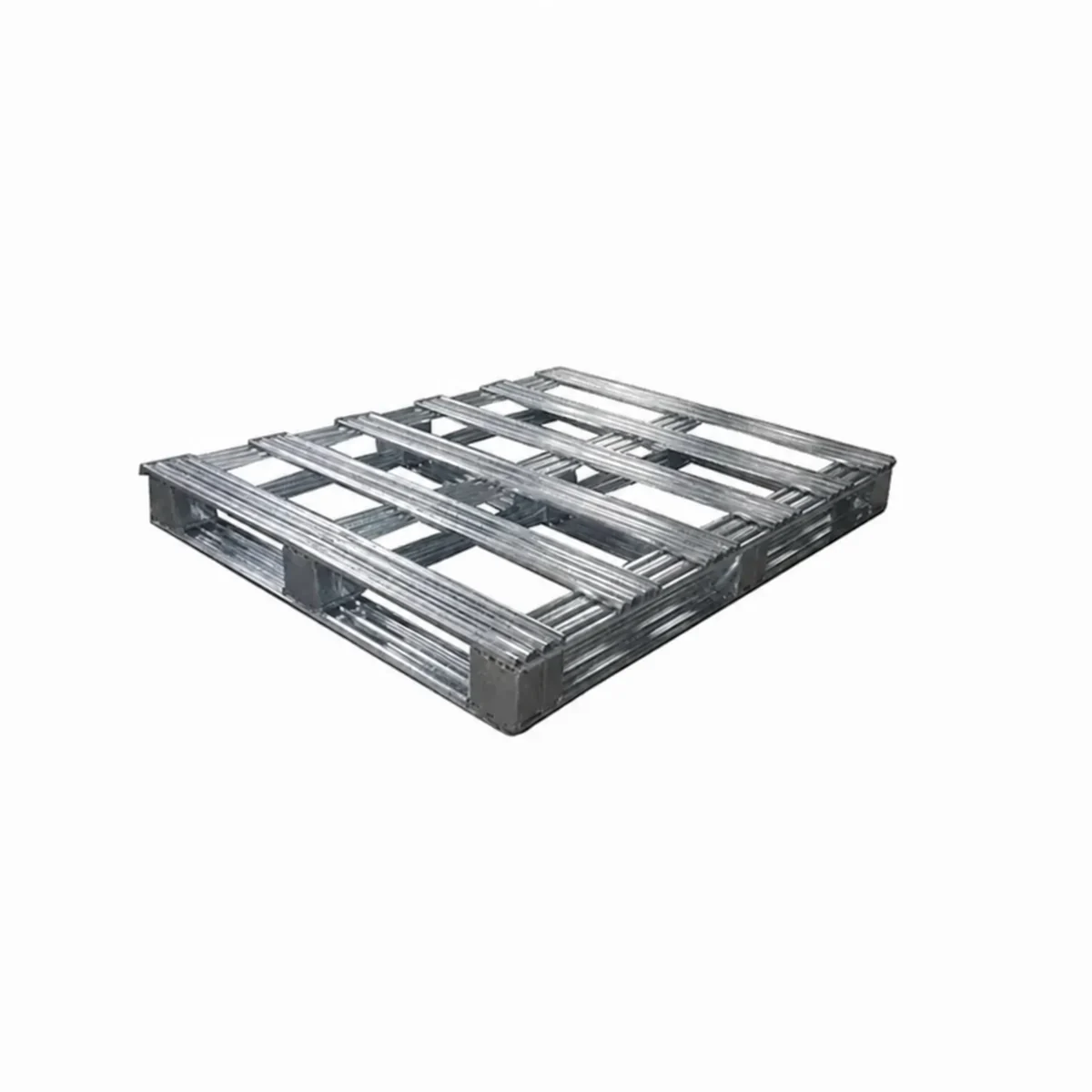
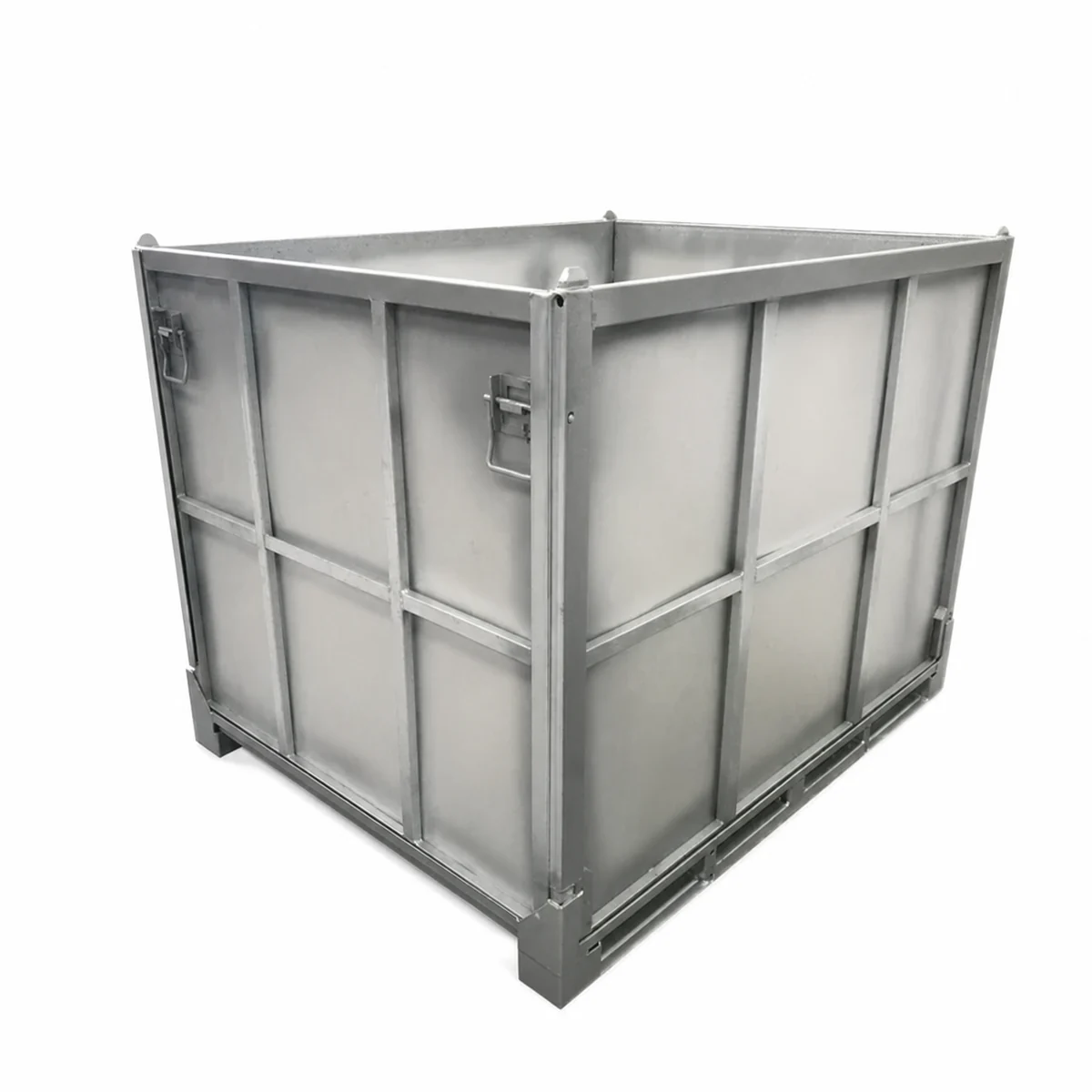
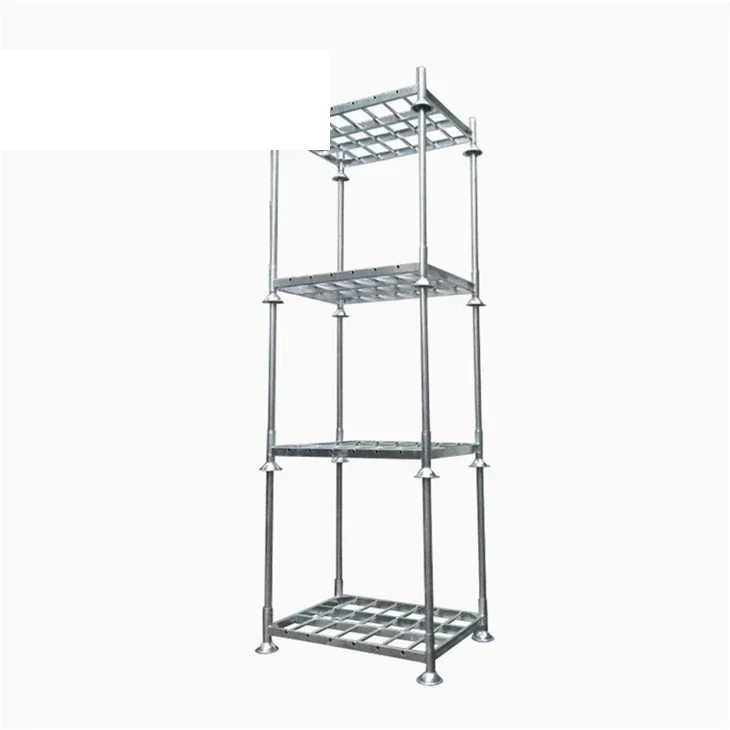
Illustrative product forms with project-specific captions
Procurement and qualification
Compare measurement definitions, not only nominal L × W × H
Ask each supplier to identify the measurement datum, usable support or internal envelope, maximum external envelope, fork openings, lower-frame clearances, product overhang rule, and storage interfaces. A quote that says only length, width, and height may not explain the space the goods actually receive or the clearance equipment requires. This is particularly important for pallet boxes, stillages, post pallets, and custom skids.
Keep the approved measurement record with the configuration drawing and inspection plan. If the product, packaging, truck, rack, or destination changes, review the relevant dimension set rather than assuming the nominal pallet size is still compatible.
Frequently asked questions
Questions to resolve before requesting a quote
Are there standard steel pallet sizes?
Projects may use common footprints, but the appropriate configuration still depends on the goods, usable support area, fork entry, storage interfaces, and shipping requirements. Confirm the selected drawing rather than relying only on a size label.
What is the difference between pallet size and usable deck size?
Overall pallet size describes the outer envelope. Usable deck or internal size describes the area available for the goods after frames, panels, posts, openings, or other features are considered.
Which dimensions matter for racking?
Provide pallet orientation, beam positions, bearing faces, loaded height, product overhang, truck route, and the selected lower-frame geometry. These are separate from a nominal footprint.
What should be sent for a size enquiry?
Send goods dimensions and photos, support/contact map, handling equipment, required access, floor/rack/stack information, desired quantity, finish exposure, packed state, and destination requirements.