A carrier for the actual part
Start with product contact, containment, and access—not a generic cage form
Steel stillages are considered when goods have irregular geometry, sensitive surfaces, repeatable orientation needs, or a handling sequence that cannot rely on a flat platform alone. The carrier may use an open frame, panel, mesh, divider, pocket, gate, dunnage, locator, or a combination of these elements. What matters is the relationship between the part and the carrier: the number of pieces, orientation, load path, permitted contact areas, access faces, and the route from loading through storage to return.
A high-quality stillage brief distinguishes product retention from product protection. A mesh side may prevent a loose item leaving the unit, while a shaped locator or soft interface may control where a painted or machined surface rests. Gates and access panels can help picking or loading but must be located around the actual workflow and stack position. By providing the part drawing, photograph, or simple no-contact map, a buyer gives the manufacturer the information needed to develop a meaningful configuration discussion without creating fictional standard dimensions or capacity claims.
Reference configuration
Reference configuration record for a steel stillage
The table below defines the information a drawing-controlled stillage record should carry for a real part or family of parts.
| Configuration field | What the project record should show |
|---|---|
| Part and orientation | State part drawing or photo reference, quantity per stillage, orientation, centre of gravity where relevant, and permitted variation between part versions. |
| Contact and no-contact zones | Map support pads, dunnage, locators, dividers, protected surfaces, prohibited-contact areas, and any replaceable contact components. |
| Containment and access | Define frame, mesh, panels, gates, openings, clear reach zones, loading order, and access while stacked where applicable. |
| Base and handling | Show fork entry, underside clearance, truck approach, product placement, floor support, and any stack or racking position. |
| Empty return | State whether the stillage returns assembled, nests, folds, has removable components, or needs a dedicated empty packing method. |
| Inspection and maintenance | Define the dimensions, contact pads, moving parts, weld locations, finish areas, marking, and replacement items that require project review. |
Structure and operating map
Structure map: part, support, containment, access, and base
A stillage drawing should show the part relationship as clearly as it shows the outside frame.
Part location
Show the required orientation, locating faces, quantity, separation, and any datum or handling orientation that must be maintained.
Contact system
Show dunnage, pads, rails, pockets, or dividers and identify whether each feature retains, protects, separates, or presents the part.
Containment and access
Show mesh or panel coverage, gates, opening direction, latches, clear reach area, and any limits when another unit is above.
Base and storage interface
Show fork openings, support points, stack engagement, and any requested rack-beam contact only where those conditions are supplied for review.
Part protection
Make every contact point intentional
A stillage can reduce damage only when part contact is identified early. Provide the product’s critical surfaces, edges, coatings, machining faces, datum points, and any allowable support positions. Explain whether components touch one another, whether they must be separated by dividers, and whether the carrier is loaded by hand, robot, crane, or forklift. This information allows a proposal to distinguish structural frame members from product-contact elements and helps prevent a protective feature from becoming an undocumented assumption.
Where pads, dunnage, or locators are needed, the project record should identify their position, attachment, replacement need, cleaning limitations, and inspection expectation. A generic material or pad description is not enough for a high-value component. Record what the contact feature must achieve—support, separation, orientation, abrasion protection, or vibration control—and where it must not touch. This makes the product drawing and future maintenance discussion more useful.
- Attach part drawings or photographs with protected zones marked.
- State the required part orientation and quantity per carrier.
- Separate retaining features from cushioning or product-contact features.
- Identify any replaceable pad, divider, or locator in the project record.
Containment and operator access
Design gates, panels, and dividers around the loading sequence
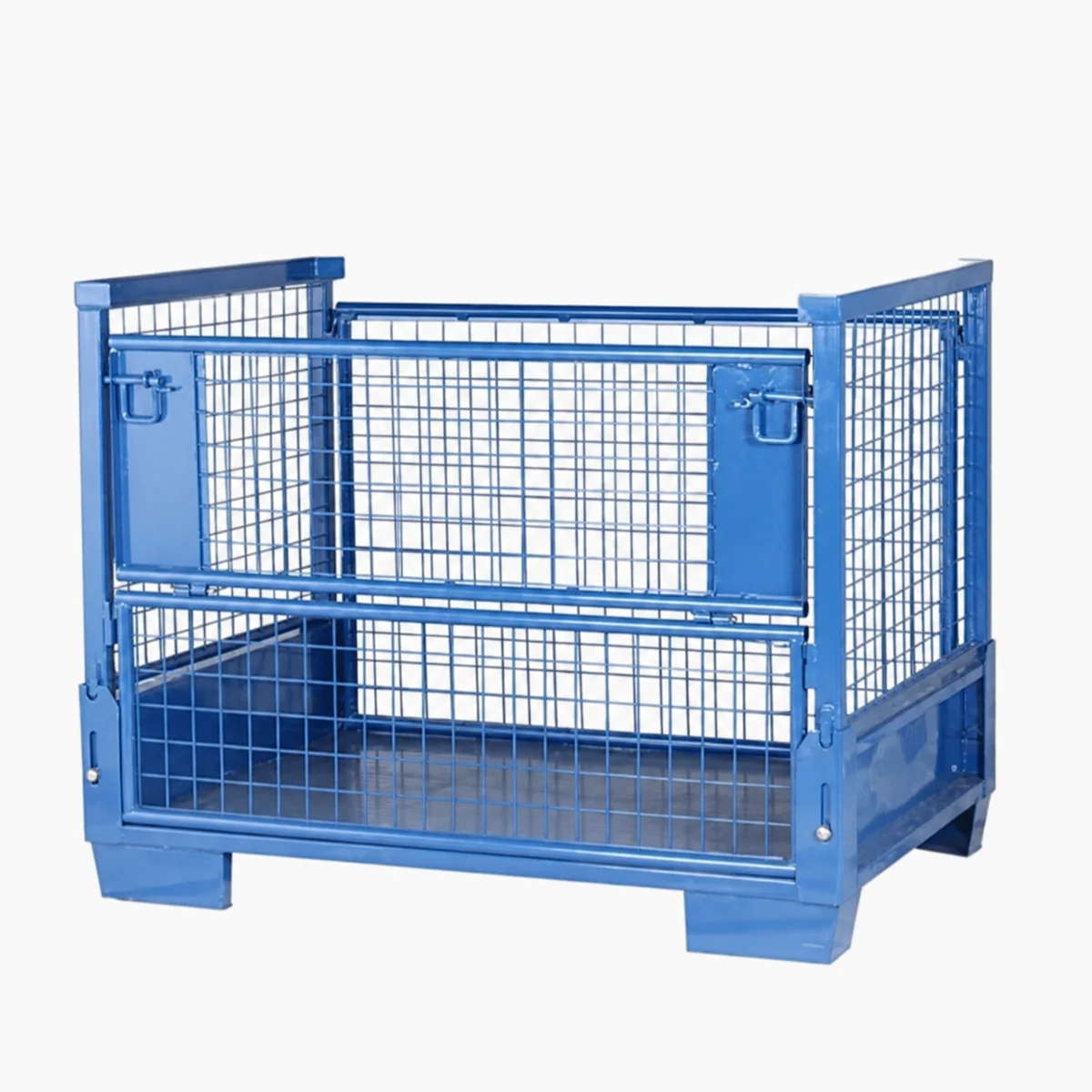
Containment can be open frame, mesh, solid panel, divider, pocket, or a controlled combination. The appropriate form follows the part size, product visibility, ventilation, reach, and protection requirement. For example, an access side may be needed for manual picking, but its clear opening, gate state, latch, and location should be considered with the way the unit is loaded, moved, or stacked. State whether access is required when another stillage sits above, whether a panel must remain open during a process, and where an operator or robot approaches the parts.
Dividers and pockets are also functional geometry. Provide the required part count, spacing, clearance, and loading order. A single stillage might serve an inbound container, a warehouse buffer, and a line-side presentation; each stage may create different access needs. Mapping the sequence helps a manufacturer propose the right access arrangement rather than adding mesh or gates as generic sales features.
Handling and returnable flow
Describe the whole cycle from loading to empty recovery
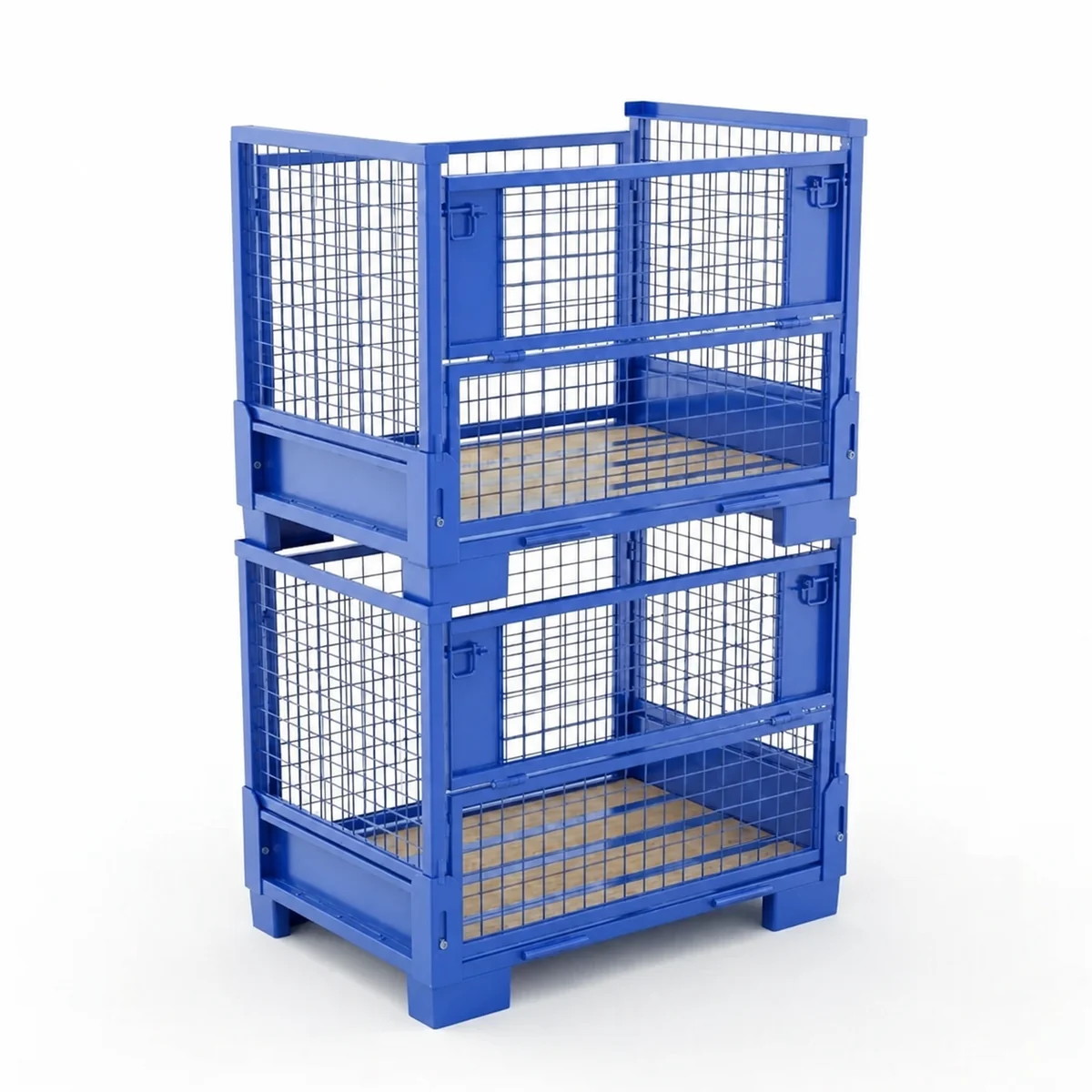
The base of a stillage must work with the chosen equipment. Describe fork entry, truck approach, lift path, storage surface, loaded stack requirement, rack request, and any conveyance or transport restraint. The same carrier may be placed on a floor, on tines, in a stack, or in a vehicle, so each position should be included in the engineering brief. A stillage is not automatically rackable or stackable merely because a reference image has feet or an upper frame.
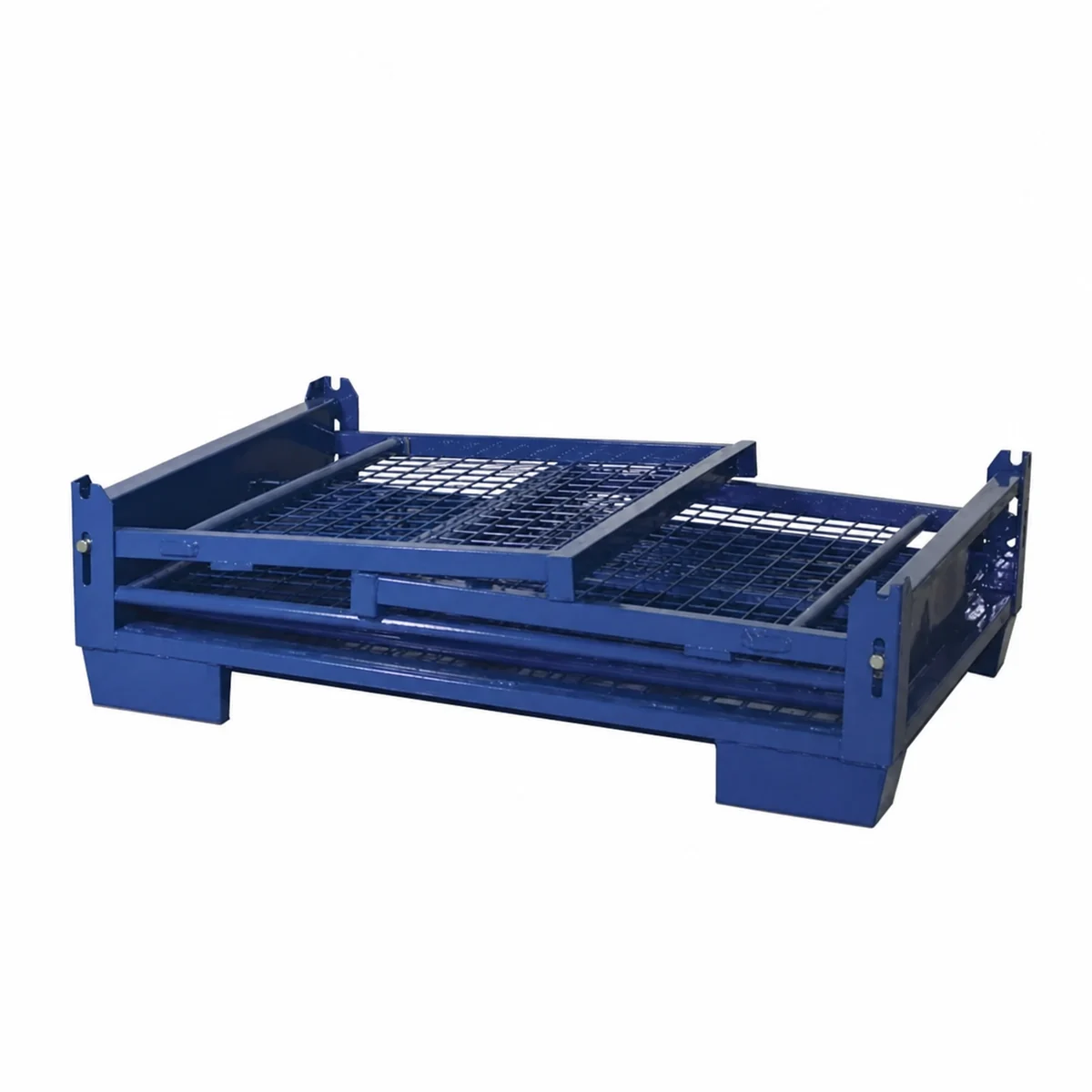
For returnable routes, state whether the carrier returns assembled, is folded, nested, or fitted with removable elements. Include the empty-return packing state, protection, labels, and destination recovery sequence. The buyer can also state expected inspection needs: base geometry, contact pads, gate function, latch condition, finish damage, and marker visibility. This is a practical way to connect the carrier to a long-term industrial workflow without making unsupported performance promises.
Project sequence
A steel-stillage RFQ sequence
A part-specific stillage begins with the component and its movement route, not a generic external box size.
- 1. Send part information
Provide drawing or photos, quantity, dimensions, orientation, protected/no-contact zones, and any acceptable product variation.
- 2. Map the operating sequence
Describe loading, placement, storage, picking, transfer, return, handling equipment, access faces, and any existing damage problem.
- 3. Review contact and containment
Confirm dunnage, divider, gate, panel, mesh, support, fork entry, stack-interface, and finish features in the drawing review.
- 4. Define inspection and dispatch
State which dimensions, contact features, functions, marking, packing, and destination details need project-specific verification.
Product visual reference
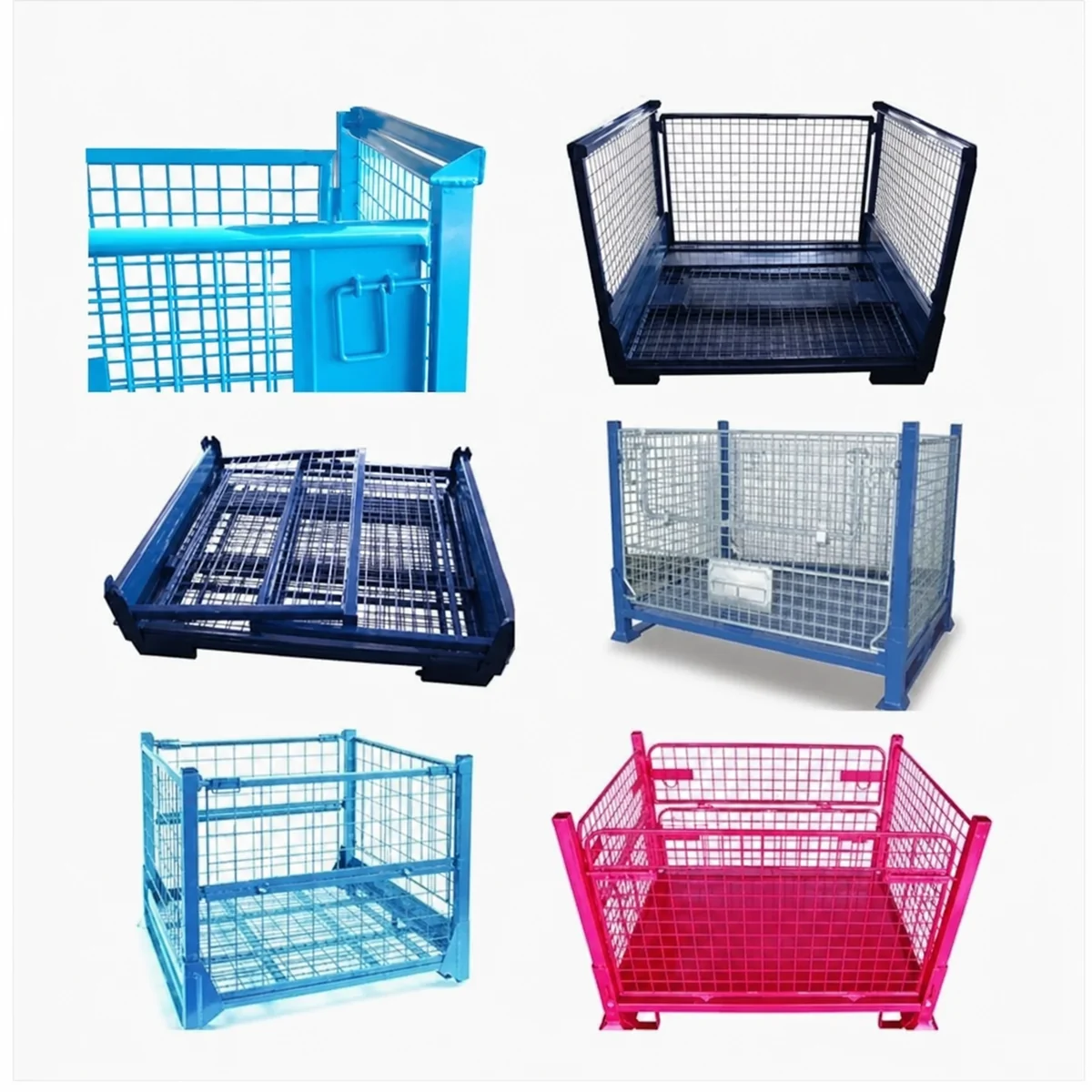
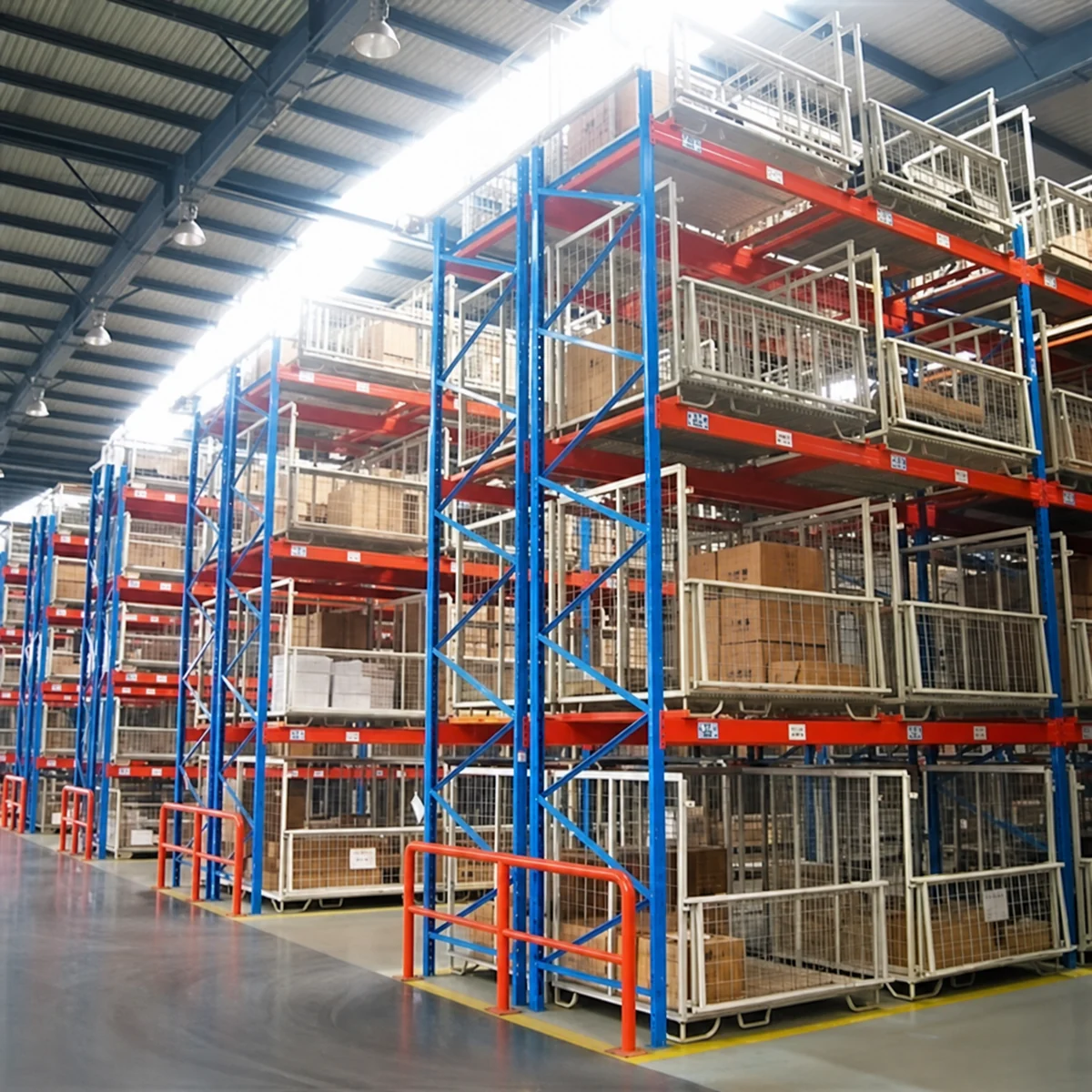
Illustrative product forms with project-specific captions
Procurement and qualification
Compare part protection, not just outer dimensions
A stillage quote should be compared against the same part brief: orientation, quantity, contact points, containment, access, handling equipment, support positions, and return route. Ask whether product-contact pads, dividers, gates, labels, and replacement components are included in the scope. A low-cost external frame may not be an equivalent proposal if the protective or operational interfaces differ.
For ongoing supply, keep the approved part reference, configuration drawing, contact-component list, inspection requirements, and revision history together. This provides a practical basis for repeat orders, replacement dunnage, and controlled changes when the component or process evolves.
Sample, batch, and packing discussion
Use a part-controlled review before a stillage batch is released
A stillage sample or review is most useful when it is evaluated with the actual part, its required orientation, product-contact pads or locators, access sequence, and handling route. Share the expected quantity and any trial or first-article requirement so the appropriate sample scope, timing, inspection, and quotation terms can be discussed; they are not universal public commitments.
For batch purchasing, agree the controlled part reference, dunnage or divider specification, replaceable-contact components, gate or panel arrangement, marking, finish, packed state, and destination unloading plan. This avoids comparing a protective carrier by frame appearance alone.
Frequently asked questions
Questions to resolve before requesting a quote
What is the difference between a steel stillage and a cage pallet?
A stillage is generally defined around a particular part’s support, orientation, containment, protection, and access needs. A cage pallet may be suitable for more general containment. The correct form follows the item and operating sequence.
Can a stillage use dividers, dunnage, or removable pads?
These can be considered where the part and process require separation or controlled contact. The selected drawing should show their location, function, attachment, replacement, and inspection requirements.
Can operators access parts while stillages are stacked?
Access must be designed around the actual stack position, opening, gate or panel state, operator reach, and handling method. It should not be assumed from a generic open-frame image.
What should be sent for a stillage enquiry?
Send part photos or drawings, quantity, orientation, contact and no-contact zones, handling equipment, access requirements, storage and return flow, quantity, finish exposure, and destination.