The direct answer
Ask for four load conditions—not one number
When a buyer asks how much a steel pallet can hold, the first response should be a request for the operating condition. The same fabricated pallet may rest fully supported on a floor, bridge between forklift tines, bear on rack beams, or transfer load through a stack interface. Each position changes the support path and the questions that a drawing, calculation, test, or approval record must answer. A single capacity phrase without this context can be misleading even when it appears precise.
A responsible capacity statement identifies the selected pallet configuration and drawing revision, the load footprint and distribution, product location, support faces, handling equipment where relevant, and the limitations of the stated condition. It should distinguish static floor storage, dynamic forklift handling, racking, and loaded stacking. It should also identify the record used as evidence, such as an approved drawing, calculation, test report, or project review. This guide helps buyers prepare those inputs without inventing values before the configuration is defined.
Reference configuration
Capacity-statement record: fields to request from the selected configuration
Use this as a checklist for an evidence-led statement. It is intentionally not a numeric table because no selected configuration record has been supplied on this public page.
| Configuration field | What the project record should show |
|---|---|
| Configuration identity | Record model or configuration, drawing number, revision, date, and the part of the design to which the statement applies. |
| Load definition | Show payload, footprint, distribution, local contacts, product position, centre of gravity where relevant, and permitted overhang. |
| Support map | Show floor contact, fork-tine position, rack-beam bearing zones, and stack-contact locations for the condition being discussed. |
| Condition statement | State whether the requirement is static floor, dynamic forklift, racking, or loaded stack; do not merge these conditions. |
| Operational assumptions | Record handling equipment, entry direction, lift or placement sequence, beam arrangement, stack alignment, levelness, and any exclusions. |
| Evidence and release | Link the project statement to the approved drawing, calculation or test reference, acceptance criteria, revision, and limitations. |
Structure and operating map
Four-condition support map
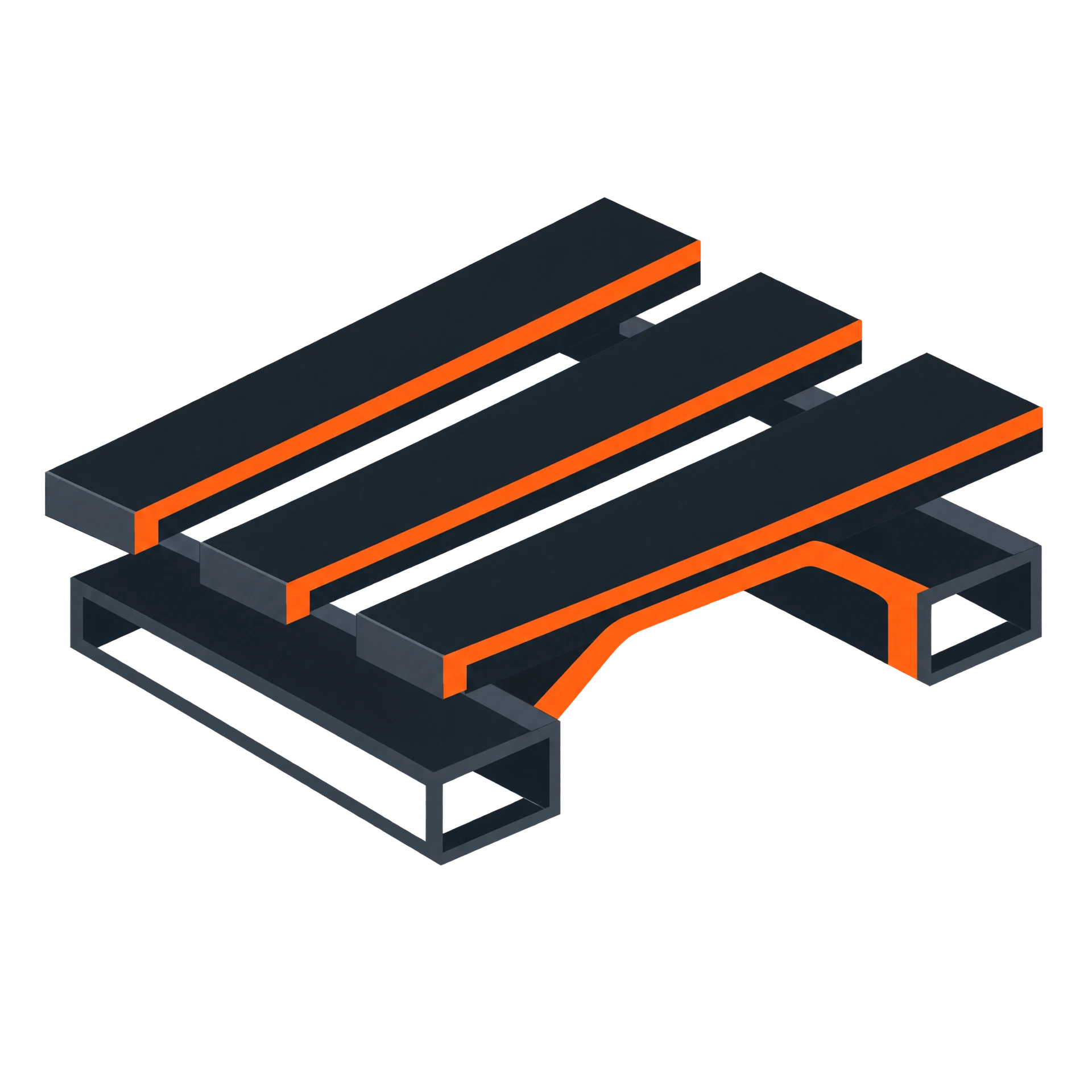
A value belongs to the support arrangement that produced it. The map below illustrates the different questions, not a finished pallet design.
Static floor
The pallet is supported through its defined floor-contact points on the stated surface; review load footprint, floor condition, and placement.
Dynamic forklift
The pallet is supported at fork-contact zones during lifting and travel; review tine envelope, entry direction, load stability, and movement assumptions.
Racking
The pallet is supported at stated beam-bearing locations; review beam position, bearing width, orientation, load placement, and retrieval method.
Loaded stack
The pallet transfers load through the selected stack interface; review contact, alignment, placement, stability, and the approved arrangement.
Static floor load
A floor-supported load still needs a defined footprint and support map
For a static floor condition, explain where the pallet touches the floor, how the goods touch the deck, whether the load is evenly distributed, and whether it is placed centrally or off-centre. A large carton, a machine frame, a bundle of bar, and a container with four local feet can all produce different deck and lower-frame requirements. The floor surface, local unevenness, product overhang, and the position of the centre of gravity may also matter to the project review.
The source record for a static statement should identify the selected configuration and its support conditions. If the operation changes from a fully supported floor to a local platform or transfer station, treat it as a separate condition. A buyer does not need to predict every final result, but should supply photos or a simple support sketch so the manufacturer can ask the right follow-up questions.
Dynamic forklift handling
Forklift movement changes the support path and the stability question
During fork handling, the pallet is carried at the fork-contact zones rather than over a broad floor area. State the truck type, fork width and spacing, entry direction, opening height, underside clearance, expected approach, lifting and travel sequence, and whether the load is restrained or naturally stable. Explain whether forks fully enter the pallet, whether the operator sometimes approaches from a side, and whether a product projection changes the centre of gravity. These are essential inputs for a dynamic handling discussion.
A floor statement should not be relabelled as a forklift statement without review. The drawing needs to show where tines bear on the lower frame and whether local members, deck, or goods are affected. If the current fleet has fork damage, include photographs. They can reveal contact zones, misalignment, or repeated approach issues that the new configuration must address.
Racking and loaded stacking
Beam support and pallet-to-pallet support are not interchangeable
Racking support is defined by the beam arrangement and pallet orientation. A racking request should include beam positions, bearing width, loaded height, stored-unit orientation, product overhang, access pattern, and the way the pallet is retrieved. A pallet racking statement does not approve the complete rack system, floor, uprights, or warehouse operation; it is only one part of the broader system discussion. The relevant geometry must be linked to the selected configuration.
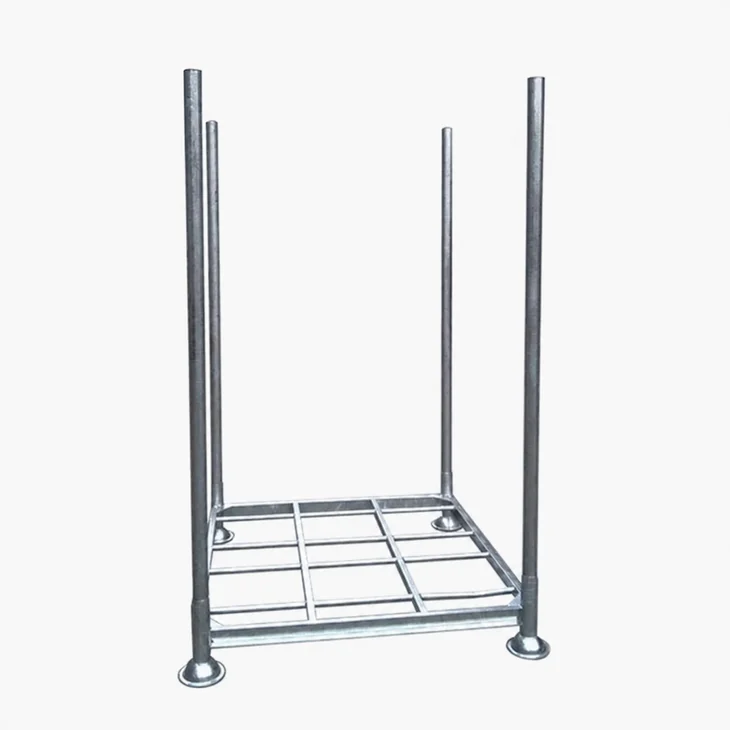
Loaded stacking is another distinct condition. The project record should show how one unit contacts the next, how it is aligned, what product remains inside the stack envelope, and how a truck places and removes a unit. A stackable image does not establish an allowable loaded arrangement. Treat post, cup, foot, or frame engagement as a configuration-specific feature that must be confirmed by drawing and project evidence.
- Send a rack beam sketch before asking for a rack-support review.
- Show upper and lower contact points for any loaded stack.
- Do not use the word rackable or stackable without the related support geometry.
- Keep warehouse-system approval separate from a pallet configuration discussion.
Load distribution
Distributed and concentrated loads need different drawings
A total payload does not explain how the load reaches the deck. A distributed load may occupy a broad area, while a concentrated load may bear at a few feet, rails, wheels, or component edges. Identify local contact zones, gaps, voids, packing dunnage, and any product feature that must bridge a deck opening. Where the load is asymmetrical, provide the approximate centre of gravity or a drawing showing the heaviest region. This information lets the design conversation focus on the actual support path.
The same principle applies below the pallet. Floor points, fork tines, rack beams, stack interfaces, and transport restraints act at different places. A useful project drawing maps the product-to-deck and pallet-to-support relationships together. That is more informative than a generic capacity chart, and it provides a foundation for supplier calculations, tests, or approval records where the project requires them.
Project sequence
How to prepare a capacity review
Use the same fact pack for every supplier so different proposals can be compared fairly.
- 1. Identify the selected configuration
Use a drawing, sketch, or existing unit reference and label the version under discussion.
- 2. Map the load
Provide product dimensions, total load, contact footprint, local points, centre-of-gravity information where relevant, and permitted overhang.
- 3. State each support condition
Separate floor, fork, rack, stack, transport, and any special transfer or conveyor condition.
- 4. Request the evidence trail
Ask for the drawing revision, assumptions, calculation or test reference where applicable, limitations, and confirmation that the record applies to the proposed configuration.
Product visual reference
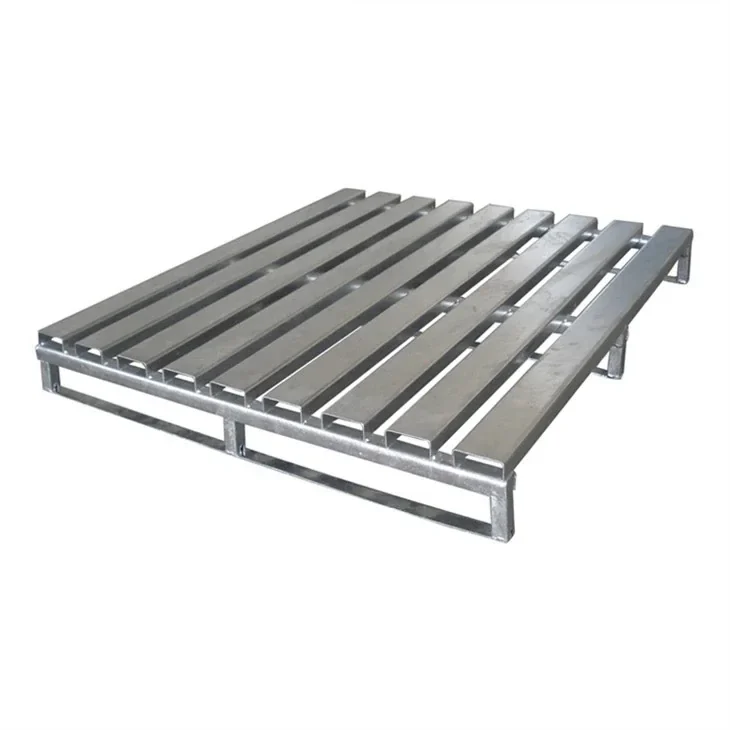
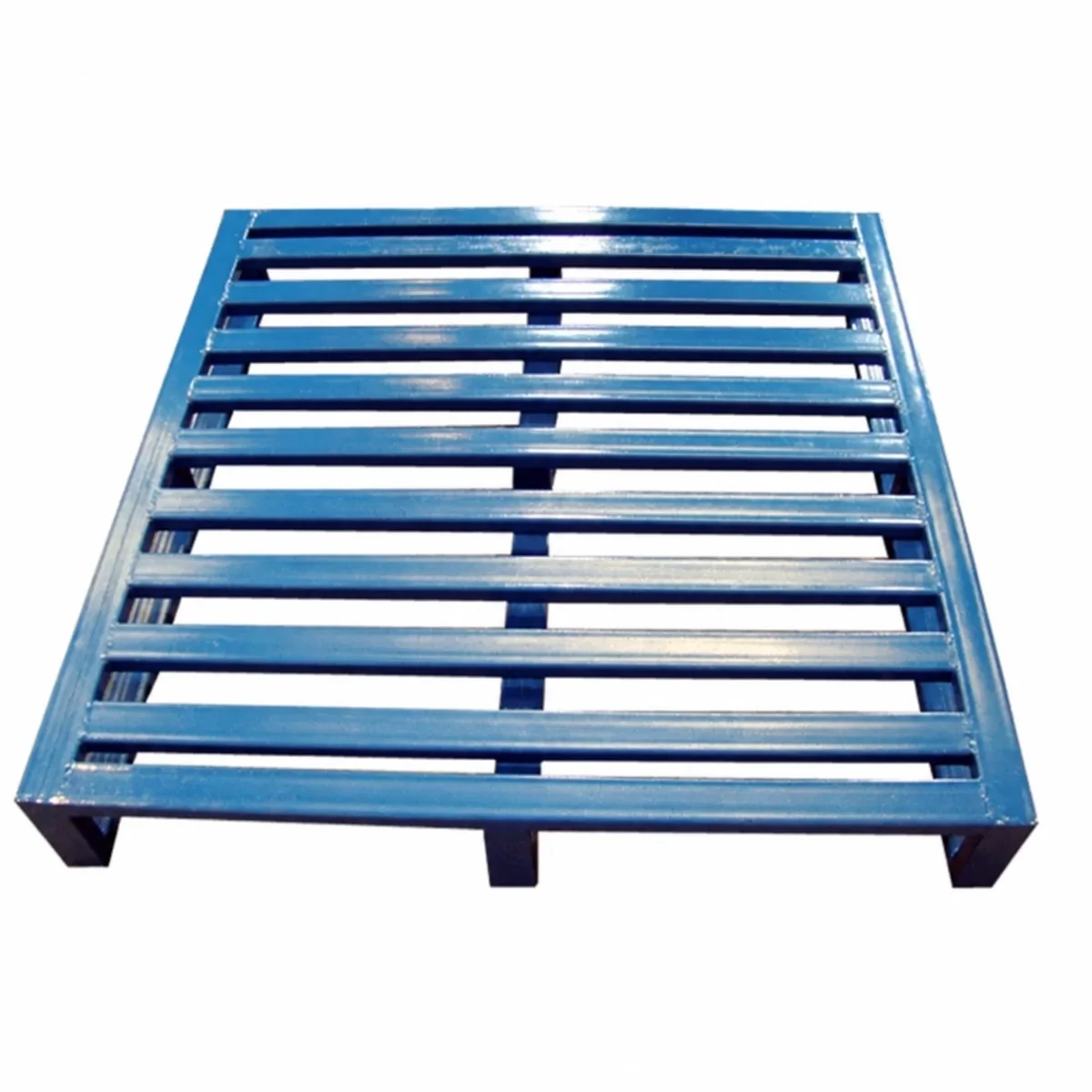
Illustrative product forms with project-specific captions
Procurement and qualification
Ask for a capacity statement that can be checked later
A supplier response is more useful when it states the exact configuration, condition, load definition, support geometry, assumptions, limitations, and document reference. Do not compare generic figures across products that have different deck contact, runner layout, fork entry, beam support, or stack interface. If a statement applies to one condition only, that limitation should remain visible in the quotation and drawing review.
For a recurring programme, keep the configuration identity, drawing revision, inspection requirements, and any supporting calculation or test reference together. This helps prevent a later material, geometry, or operating change from being treated as though it were covered by the original statement.
Frequently asked questions
Questions to resolve before requesting a quote
Why does the page not publish a steel pallet load number?
A public number without configuration, load distribution, support geometry, and evidence can be misleading. The value should be tied to the selected drawing and operating condition.
What is the difference between static and dynamic load?
Static refers to a stated support position such as a level floor. Dynamic forklift handling introduces tine contact, movement, approach, and stability conditions that need separate review.
Does a pallet capacity statement approve racking?
No. A pallet racking statement, when supplied, concerns the pallet under stated beam support. The wider racking system, site, and operating procedure require their own project review.
What should I attach for a load-capacity discussion?
Send the configuration drawing or current unit photo, goods dimensions and footprint, support sketches, fork details, rack beam layout or stack arrangement, and the intended operating sequence.