Containment is a configuration decision
Define the usable internal space, access, and empty-return state
A steel pallet box is chosen when goods need a defined containment boundary during storage, transfer, or returnable logistics. The external outline is only part of the requirement. Buyers should state the usable internal length, width, height, required clearance for the goods, fill method, load orientation, access face, and any need for visibility, ventilation, or protection. External dimensions should never be treated as a substitute for usable internal space, especially where panels, hinges, posts, or lower-frame members affect the loading envelope.
The second issue is how the box changes through the workflow. A configuration may use fixed, mesh, removable, or fold-down panels; each option changes loading, picking, cleaning, return transport, and operator access. The selected drawing should identify the panel layout, gate or opening state, latches, approved folding or dismantling sequence, and the transport state when empty. This lets the buyer discuss a real process rather than assuming every pallet box has the same access or collapse feature.
Reference configuration
Reference configuration record for a steel pallet box
Use this record to align the box’s containment, internal space, access, handling, and return requirements before approving a drawing.
| Configuration field | What the project record should show |
|---|---|
| External and clear internal envelope | Record external envelope, usable internal dimensions, measurement datum, required loading clearance, fill height, and permitted overhang or projections. |
| Panel layout | Identify each side or end as fixed, mesh, removable, fold-down, open, or another project-defined form; show any ventilation or visibility need. |
| Access and gate function | State access face, clear opening, hinge or opening direction, latch or retention method, and whether access is needed while units are stacked. |
| Base and handling | Show product support, fork-entry sides, underside clearance, truck approach, floor or rack position, and any stack engagement. |
| Deployed and return states | State whether the unit stays assembled, folds, dismantles, or has loose components; show the approved empty transport and recovery process. |
| Packing and inspection | Define required checks for internal space, panel function, latches, fold sequence, stack interface, finish, marking, and protected dispatch state. |
Structure and operating map
Structure map: clear space, access panel, base, and return state
A controlled drawing should identify which dimensions are external and which describe the usable interior.
Usable interior
Show the internal clear length, width, height, load-entry clearance, and any panel or frame features that reduce usable space.
Panel and access face
Show panel type, access opening, hinge or removal direction, latch/retention, and whether access is permitted in a stacked position.
Base and handling
Show product-support area, fork openings, lower-frame clearances, floor contact, and any requested stack or rack support location.
Empty transport state
Show the approved folded, removed-panel, or assembled state, restraint, protection, and recovery sequence for empty return.
Internal space and containment
Write the requirement from the inside out
The main purpose of a pallet box is not simply to create sides; it is to control the goods inside. Start with the required clear internal space, product envelope, loading method, product count, and whether goods are loose, packaged, nested, or separated. Identify the location of any protrusions, access zones, fill height, ventilation requirement, and surfaces that need protection. These inputs determine whether solid panels, mesh, dividers, pockets, or an open face are more appropriate for the selected configuration.
For a serious procurement comparison, make the measurement basis explicit. Ask suppliers to distinguish overall dimensions from usable internal dimensions and to identify the frame, panel, gate, or lower members that affect the loading opening. This avoids a common mismatch where two boxes appear similar externally but accept different goods, packaging, or loading methods internally.
- State the goods envelope and required loading clearance.
- Identify which sides must contain, protect, ventilate, or remain open.
- Specify access while on the floor, on tines, or in a stack where relevant.
- Record the internal dimensions from a stated measurement datum in the approval drawing.
Access and panel operation
Treat gates, latches, and fold lines as operating features
Access design should begin with the operator. Describe from which side goods are loaded or removed, how high the opening must be, whether the unit is picked manually or by equipment, and whether a panel needs to remain open during a process. If a gate, fold-down panel, removable side, or latch is considered, its state and retention method should appear in the configuration drawing. A panel that is open during loading may create a different clearance or stack condition than the same box when closed.
Folding or dismantling should also be documented as an approved sequence rather than inferred from a product family image. The buyer can ask how panels are released, how loose parts are retained, what empty state is transported, and how the unit is rebuilt at destination. This focus keeps the returnable flow practical and makes it easier to compare a fixed box against a foldable or removable-panel alternative.
Handling, stacking, and export
Link the containment unit to the same handling and shipment facts as its contents
A box remains a material-handling unit, so the base must be reviewed with the forklift, storage, and transport route. Provide the actual truck and tine envelope, entry direction, product distribution, floor position, desired access, any loaded stack condition, and any racking request. A solid-panel box can conceal the goods, which makes it even more important to define loading limits, centre of gravity concerns, and the placement process in the project record. The page does not assume a particular condition based on the visible form.
For export or cross-site return, define the packed state, protection, labels, empty return arrangement, vehicle or container constraints, and destination unloading method. A credible container plan requires the selected box’s verified external packed dimensions, actual mass information, approved restraint, and an equipment-specific layout. Images can illustrate product form, but the final shipping method must come from project information and controlled documentation.
Project sequence
A steel pallet box RFQ sequence
A clear brief prevents an external box size from hiding the access and return requirements that determine day-to-day usability.
- 1. Define the goods and interior
Provide goods dimensions, packaging, fill method, quantity, loading clearance, protected surfaces, and any required internal separation.
- 2. Define the panels and access
State each panel or gate requirement, access face, clear opening, operation, visibility, ventilation, and stacked-access need.
- 3. Define handling and return
Provide fork details, storage conditions, any stack or rack request, deployed-to-empty sequence, return transport, and destination recovery method.
- 4. Review the drawing and packing plan
Confirm external and internal dimensions, panel states, latches, base, handling interfaces, inspection points, and shipment protection before release.
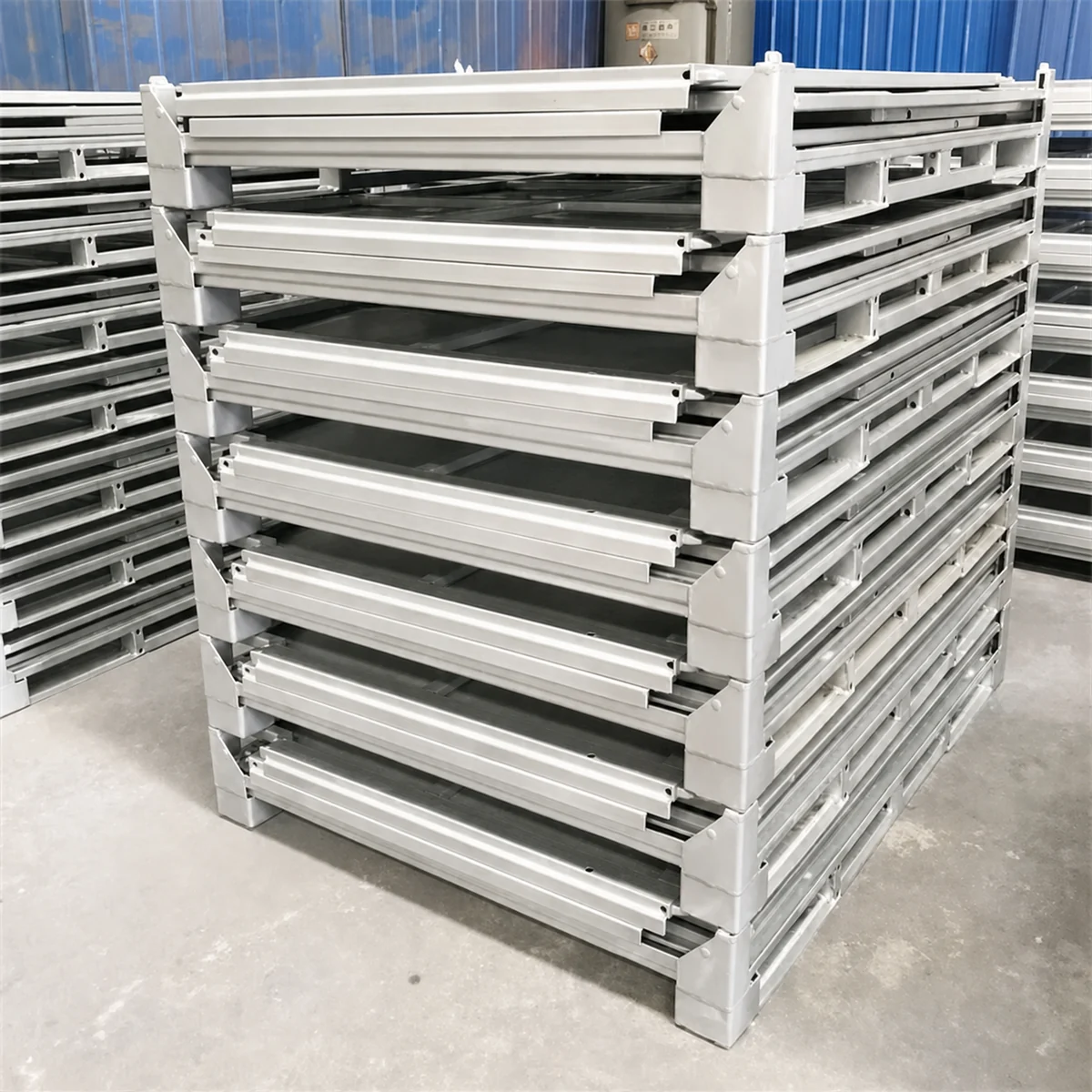
Product visual reference
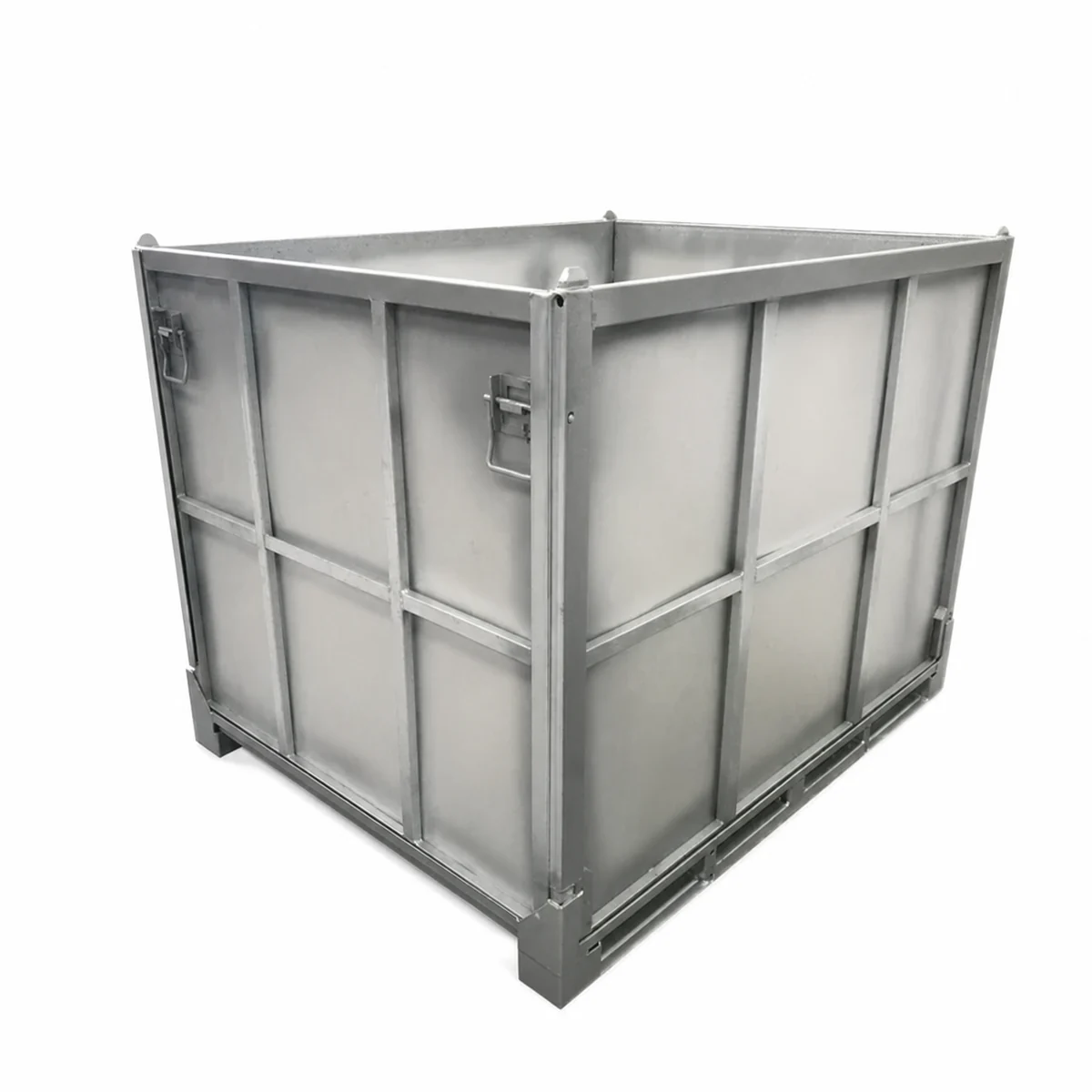
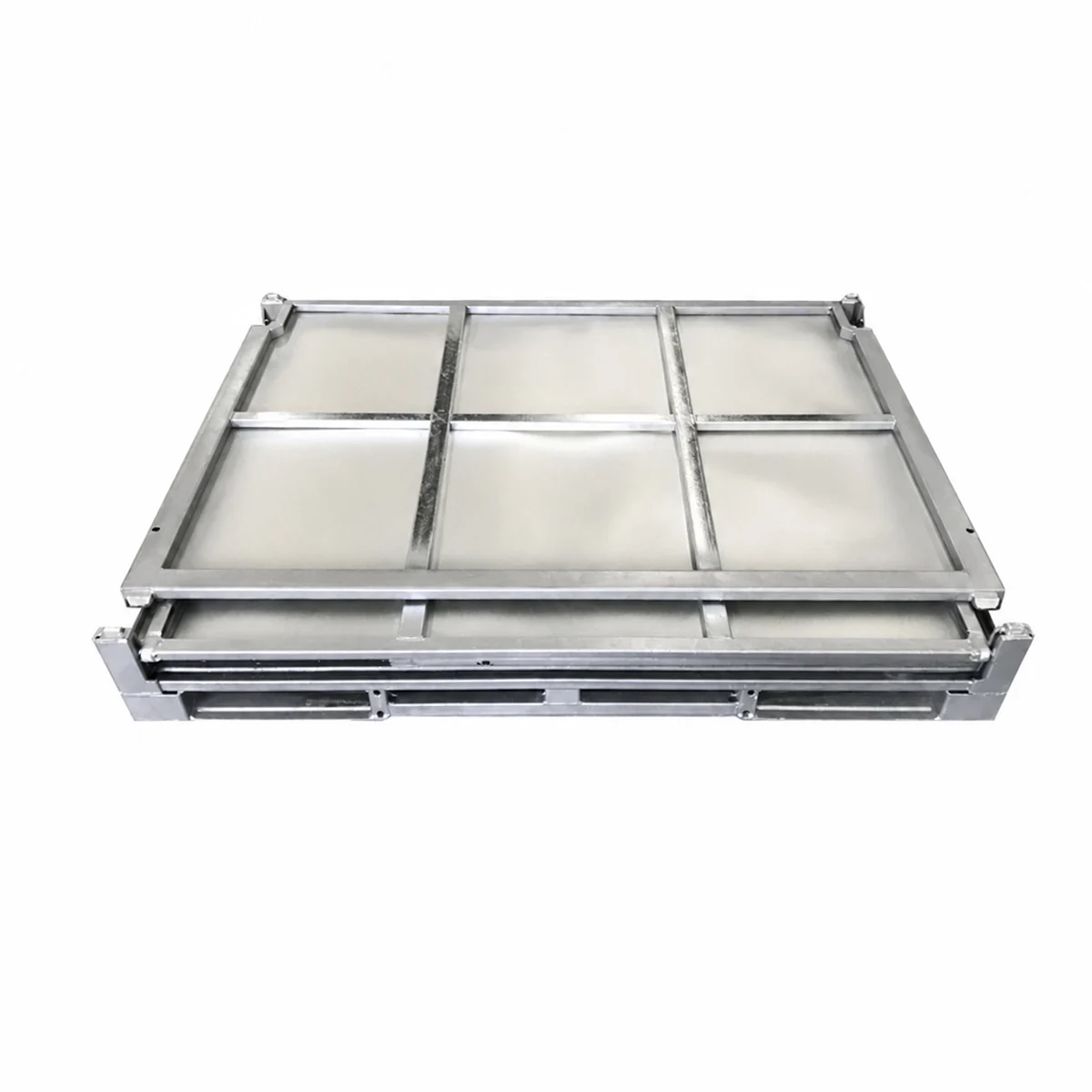
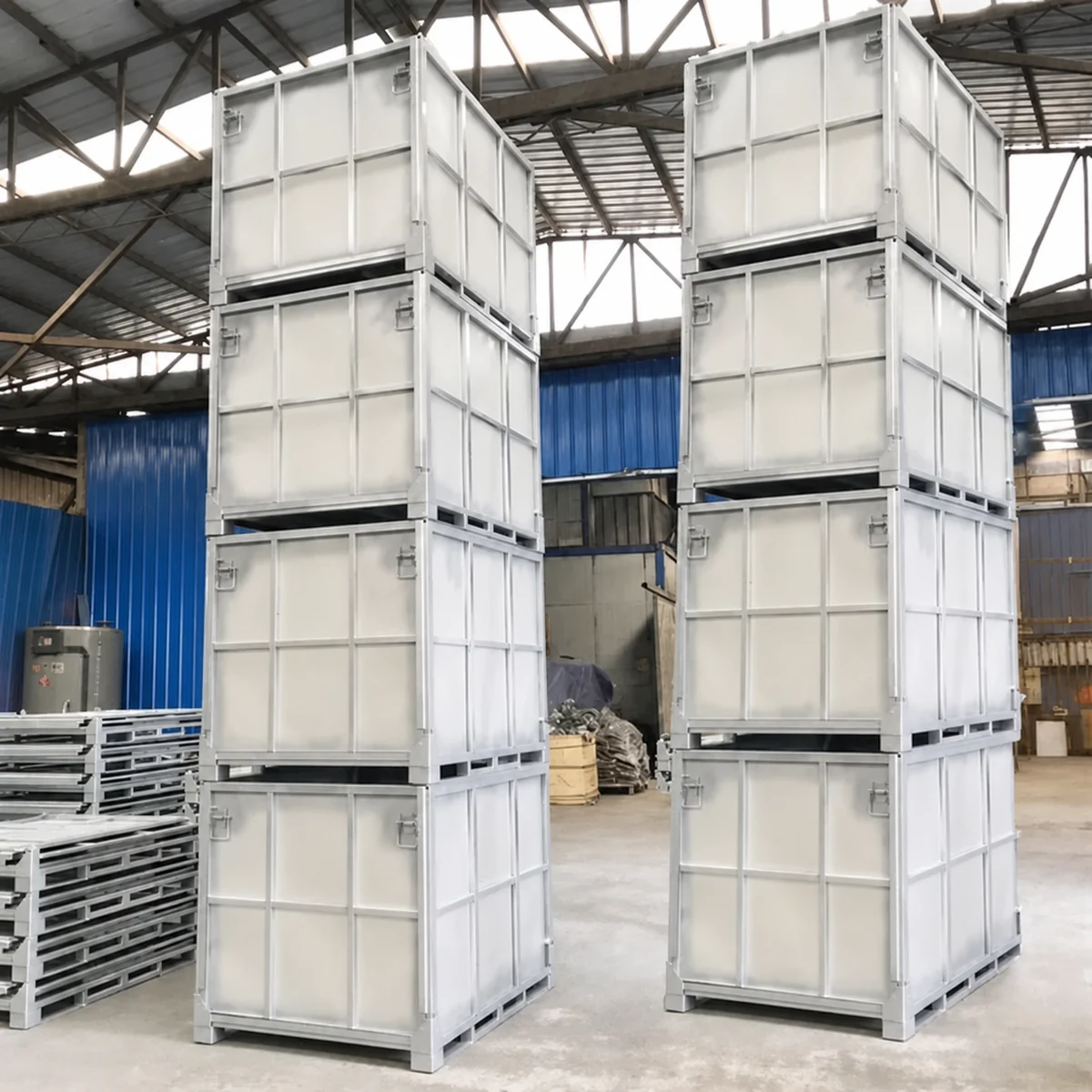
Illustrative product forms with project-specific captions
Procurement and qualification
Compare usable space, access, and the return state—not only the outside box
Ask suppliers to state the proposed clear internal dimensions, panel layout, access opening, fold or removal state, fork entry, stack or rack condition, finish, marking, and packing scope. Compare each quotation against the same goods and loading method. The same external envelope can deliver different usable space and different operator access if the panel or frame arrangement changes.
For repeat logistics, retain a controlled drawing with the approved panel operation, latch function, empty return arrangement, and inspection requirements. This helps purchasing teams compare future alternatives and helps operations recover the intended deployed state after shipment.
Sample, batch, and packing discussion
Confirm panel operation and empty return before a pallet-box batch is released
A pallet-box sample or configuration review should demonstrate the selected panel/mesh arrangement, usable internal space, product access, fold or removal sequence, fork handling, and proposed empty-return state. Provide the expected quantity, goods, access method, and available timing so any project-specific sample scope and quotation terms can be confirmed without inventing a standard MOQ or lead time.
For batch purchase, retain the controlled drawing, panel order, latch or retention details, finish and marking, packing protection, shipment state, destination unloading method, and return instruction. These records help preserve the intended usable space and access route through repeat supply.
Frequently asked questions
Questions to resolve before requesting a quote
Are outside dimensions the same as the usable internal dimensions?
No. The frame, panels, gates, hinges, and base can affect the usable interior. The controlled drawing should state the internal clear dimensions and the measurement basis for the selected configuration.
Can a pallet box have a drop gate or removable panel?
Access features can be reviewed for the application. The selected drawing should identify the access face, clear opening, operation, latch or retention method, and any restriction in a stacked state.
Does every steel pallet box fold when empty?
No. A box may remain assembled, have removable components, or use a foldable arrangement. The empty transport state and recovery sequence must be confirmed for the selected configuration.
What should I send to request a pallet box quotation?
Send the goods envelope, required usable internal space, panel and access needs, loading method, fork details, storage conditions, return state, quantity, finish exposure, and destination information.